

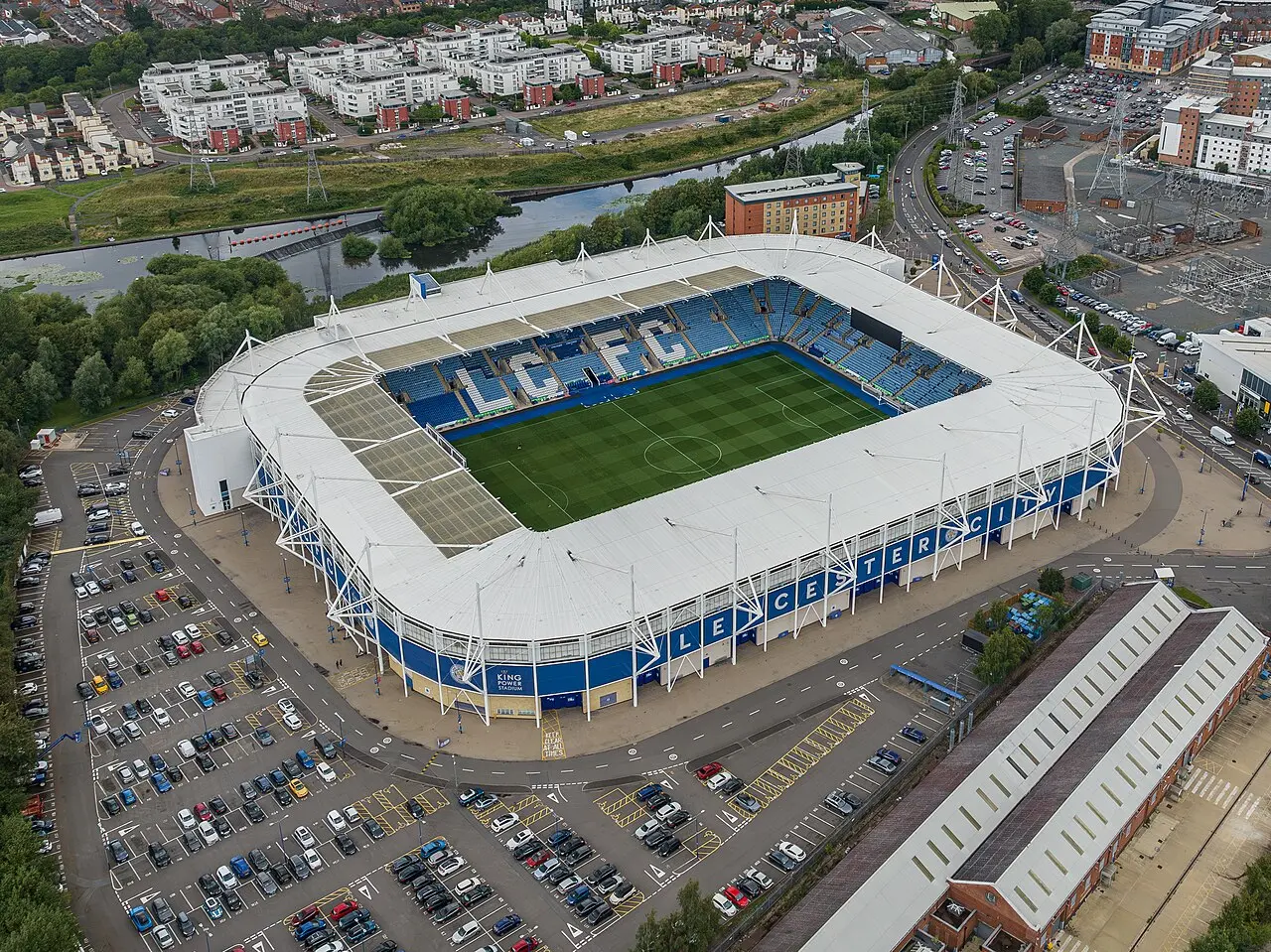
Leicester City’s failed appeal against an English Football League financial decision has raised a major question for clubs dropping down the divisions. Can a club count future Premier League money towards its spending limit if it has already borrowed against those payments?
On 24 September 2026, an independent Club Financial Review Panel, known as the CFRP, ruled that Leicester could not include certain Premier League distributions in its League One Salary Cost Management Protocol, or SCMP, calculation.
The club had taken out loans under a financing facility secured against future Premier League payments, including money linked to relegation. Under the terms of that deal, those payments were later due to go straight to the lender.
The panel backed the EFL’s decision to strip out the money that the lender would keep. It found that Leicester had already received the financial benefit of those distributions through the earlier borrowing arrangement. Letting the club count that same income a second time in a later reporting period would have given Leicester spending power based on money it would neither receive nor keep.
The decision matters across the league because the EFL rule at the heart of the dispute specifically mentions parachute payments. The ruling could now serve as an important benchmark when the league examines other clubs that use future central distributions as security for loans.
Even so, the ruling does not create a blanket ban on counting parachute payments towards League One spending limits. The dispute turned on a narrower issue, which was whether Leicester had already forward-financed that income by assigning future distributions to a lender in exchange for cash upfront.
How Leicester financed future Premier League distributions
Leicester signed its first facility agreement with a lender, referred to as Blank Bank in the published decision, on 12 September 2024. That agreement allowed the club to draw cash through a loan and a credit facility. It also laid out the repayment rules that would take effect if Leicester were relegated from the Premier League.
Three months later, on 20 December 2024, League One clubs voted through changes to the division’s SCMP rules. One of those changes addressed Premier League distributions collected early through forward financing. That meant the rule was already on the books before Leicester dropped into the EFL.
Leicester was relegated from the Premier League at the end of the 2024/25 season and officially became an EFL member in June 2025. On 18 July 2025, the club signed an amended and restated version of its facility agreement. The panel noted that this updated contract also brought in an additional loan facility.
When Leicester suffered a second consecutive relegation from the Championship in May 2026, it had to submit an SCMP budget as a League One club. In an email to the EFL on 22 May, Leicester explained that its Premier League distributions would be paid directly to the lender under the security arrangement. Only money left over after the lender had been paid back in full would be passed on to the club.
Leicester handed in its SCMP calculation in June. After reviewing the figures, the EFL’s Club Financial Reporting Unit, the CFRU, decided that the sums the bank would retain had to be removed from the club’s Relevant Turnover.
That reduction left Leicester on course to breach its allowed spending limit, prompting the EFL to place the club under a player registration embargo on 26 June.
Also Read: Inside SC Cambuur’s urgent search for financial stability
Leicester challenged the embargo. The club argued that it had arranged the facility as normal working-capital borrowing while still playing in the Premier League. Using Premier League distributions to pay down the debt later only changed the source and timing of repayment, the club claimed, rather than turning the original loan into forward financing.
Leicester also argued that the EFL rule had been brought in after the original facility was signed and should not be applied retrospectively.
The CFRP rejected those arguments in full, as set out in the published Leicester City ruling.
Why the panel upheld the EFL decision
The case did not turn on whether Leicester had a right to receive parachute payments. Instead, it came down to how the club had arranged to take the financial benefit of those payments early.
Leicester’s loan agreements were backed by legal documents called security assignments. Through those assignments, the club handed the lender rights over its Premier League receivables, meaning money owed to the club, including central distributions due between September 2024 and January 2026.
The panel found that the lender advancing the cash and Leicester handing over those rights were directly tied together. Completing the assignment was a mandatory condition that Leicester had to meet before it could draw any money from the facility.
That contract structure was crucial. The Premier League distributions were not simply arriving in Leicester’s own bank account and then being used by the club to pay off a normal loan. Instead, the money was scheduled to bypass the club and go straight to the lender. Leicester had collected cash in an earlier period under the financing deal in exchange for giving up the right to receive those corresponding distributions later.
The panel decided that this structure amounted to forward financing under the SCMP rules. It also dismissed Leicester’s claim that the assignment was nothing more than a practical payment mechanism. Under the agreements, Leicester had to get permission from the Premier League to assign certain receivables, including relegation payments. If the club failed to secure that consent, the lender had the right to demand immediate repayment of the loans.
In reaching its verdict, the panel looked at the practical financial reality, or economic substance, of the deal. Because Leicester had already taken the benefit of the cash in an earlier period and the lender had the right to keep the future distributions, counting those same distributions again as Relevant Turnover would have inflated the club’s spending limit using cash it no longer controlled.

While the published decision calls the lender Blank Bank, separate public filings at Companies House list Macquarie Bank Limited, London Branch as the party holding charges created on 12 September 2024, the exact date of Leicester’s first facility agreement. Those records point towards Macquarie Bank, though the published ruling itself keeps the lender’s name anonymous.
Also Read: Widnes Town community ownership plan faces a big financial test
How the SCMP rule treats forward-financed income
The rule at the centre of the case is paragraph 1.16.1 of Annex A to the League One SCMP regulations. It states that when Premier League distributions tied to a reporting period, including a parachute payment, have already been received in cash during an earlier period through forward financing, the sum received early cannot be counted again in Relevant Turnover for the later period.
Guidance attached to the rule gives a straightforward example of how this works in practice. Suppose a club is relegated from the Premier League, spends one season in the Championship, and then suffers relegation into League One. During its year in the Championship, the club forward-finances all of its first-year parachute payment alongside 70 per cent of its second-year parachute payment.
When that club starts life in League One, it is only allowed to count the remaining 30 per cent of its second-year payment in its Relevant Turnover calculation. The entire first-year payment and most of the second-year payment are excluded because the cash was already drawn early in a previous financial period.
This example shows why the rule does not wipe out parachute payments simply because a club has been relegated. A club can still count whatever share of a parachute payment has not already been brought forward through borrowing, provided it meets the rest of the SCMP rules.
The same principle applies to other types of future income. Under EFL rules, any other revenue streams that are, or will be, forward-financed must be reported to the league and assessed case by case. The rules also make clear that money raised from a loan cannot be counted as Relevant Turnover in its own right.
The EFL sets out the wider rules governing club spending in its financial regulation framework.
Why the 2026/27 League One rules raise the stakes
The Leicester ruling comes at a time when League One clubs are adjusting to stricter SCMP spending limits. For the 2026/27 season, the standard share of Relevant Turnover that a club can spend on player and manager costs has dropped from 60 per cent to 50 per cent, with manager expenses now included inside that cap.
Clubs playing their first season in League One immediately after relegation from the Championship get a higher allowance of 65 per cent. The rules around owner funding have also shifted. Standard League One clubs can count 50 per cent of eligible non-repayable owner equity injections towards their spending limit, while clubs newly relegated from the Championship can count 65 per cent.
Because those spending caps are tighter, the way Relevant Turnover is calculated carries far more weight. If a club has already borrowed against future central distributions, the actual figure it can plug into a later SCMP calculation may be much smaller than the headline value of its parachute payments suggests.
A simple illustration shows the difference. Take a newly relegated club with £10 million in Relevant Turnover before any other permitted additions. At the 65 per cent rate for newly relegated teams, that £10 million gives the club £6.5 million in turnover-based spending capacity. If £4 million of that revenue had already been forward-financed and had to be excluded, the calculation would be based on £6 million instead. At the same 65 per cent rate, the club’s turnover-based spending limit would drop to £3.9 million.
This example is purely an illustration rather than a calculation of Leicester’s own budget. A full SCMP calculation also factors in other sources of funding, including eligible non-repayable owner injections and net transfer profit from player and manager trading. Even so, the numbers show how the timing and structure of a loan can make a major difference to how much a club is allowed to spend on wages.
Also Read: Is Lommel SK finally delivering on City Football Group’s plan?
Other clubs that borrow against central distributions
Leicester is not the only club to use central payments as security for borrowing. Sheffield United’s audited accounts for the year ended 30 June 2025 disclosed a bank loan of £23.95 million. That borrowing was secured by fixed and floating charges over the club’s assets and property, together with fixed charges over Premier League Central Funds, with final repayment due by May 2026.
Sheffield United’s accounts also listed more than £21.5 million in factored loans secured against trade debtors, which is money owed to the club from normal trading such as transfer instalments or commercial deals. Those factored loans are a separate type of borrowing and should not be confused with loans secured against central league distributions.

While the Sheffield United filings confirm that other clubs pledge Premier League Central Funds as security for loans, they do not prove that Sheffield United forward-financed a specific parachute payment or faced the same SCMP issue as Leicester. That distinction is crucial. Having a bank charge or a loan secured against central funds is not automatically the same as entering an advance facility where a lender has the legal right to collect and keep future distributions to pay back cash provided earlier.
What the case means for football club financing
The wider use of borrowing against future distributions explains why the Leicester case matters well beyond one club. Football clubs regularly borrow against incoming payments to smooth out cash flow, cover day-to-day running costs, or meet existing financial commitments before scheduled league distributions arrive.
However, cash entering a bank account, revenue recorded in annual accounting statements, and Relevant Turnover under SCMP rules are treated differently. Ordinary repayable loans provide cash flow, and eligible non-repayable owner equity injections can boost spending limits within set percentages, but neither is the same as counting future distributions that have already been signed over to a bank.
When a club pledges future receivables to secure an advance facility, the key regulatory question is whether that contract structure means the future income has already been turned into cash in an earlier period. If the club has already taken the cash benefit upfront and assigned the incoming distributions directly to the lender, it cannot count those same distributions again when working out its future wage cap.
Unanswered questions for the EFL and League One
The panel’s decision on Leicester does not automatically dictate how every other club’s borrowing will be treated. Leicester’s case rested on specific loan contracts, security assignments, and repayment terms. Any other club’s financing arrangement may be built differently and would have to be judged on its own contract wording.
Even so, the ruling gives the EFL a clear precedent for testing the link between club borrowing and future distributions. Clubs that use central payments as security now have to weigh up not only how much cash they can raise today, but also how that borrowing structure might reduce the turnover they can report in later SCMP seasons.
Several important questions remain unanswered in the public record. Because the published decision redacts the specific numbers from Leicester’s SCMP submission, the exact sum stripped out of the club’s Relevant Turnover and the resulting cut to its spending limit are not publicly known. The ruling also gives no indication of how many other League One clubs have financing deals that could raise similar issues.
Only the EFL is in a position to answer that wider question. The league holds the private SCMP submissions and supporting loan documents that show whether other clubs have forward-financed central distributions. The EFL could clarify how many clubs have disclosed arrangements of this kind and whether it has issued fresh guidance to clubs in the wake of the Leicester case.
Also Read: The Royal Antwerp verdict saved UEFA quotas, not youth development
For now, the underlying principle is clear. Parachute payments remain a major part of the financial picture for clubs relegated from the Premier League, but a club cannot necessarily count that money in a later reporting period if it has already drawn the benefit of the income through borrowing.
The Leicester ruling has not removed parachute payments from League One spending rules, but it has established that clubs must account for future income they have already financed.