

Widnes Town supporters have backed a plan to move the club toward community ownership. While a unanimous vote at a public meeting on 4 November gave the idea a clear mandate, that decision is only the first step. To operate without relying on a wealthy backer, the club still has to launch a membership scheme, bring in sponsors, recruit volunteers and get more people through the turnstiles.
Chairman Ryan Bamford confirmed the outcome of the meeting in a statement published on 5 November. Those in the room voted to form a Community Benefit Society (CBS), setting an ambition for Widnes Town to become 100% owned by its supporters and the local community.
The plan offers a clear direction after a tough start to the new club’s debut season in the North West Counties League. Voting for a new direction, however, does not mean the ownership change is finished or that the club’s financial problems have been solved.
Bamford made this point clear in his update. “Becoming a community club won’t automatically make us sustainable,” he said. He explained that the club needs people to buy memberships and attend matches, alongside local businesses stepping up with financial backing. He also stressed that no wealthy backer is waiting to cover the shortfall.
Winning the support of the people at the meeting was the straightforward part. The harder work now is turning that goodwill into a formal structure and a reliable source of income.
A new club built after Widnes FC’s collapse
Widnes Town was formed in September 2025 after the former Widnes FC closed earlier that summer. The previous club had won promotion to the Northern Premier League Premier Division, and its closure left the town without a senior team in the non-league pyramid.
The new club was set up with no ties to the former Widnes FC ownership. Its founding announcement described it as a fresh project to bring senior football back to Widnes, with plans for men’s and women’s teams alongside a community trust to run an academy, raise funds and carry out local work.
In May 2026, the Football Association (FA) accepted Widnes Town as a phoenix club, a newly formed team created to replace one that folded. The FA placed the team in Division One of the North West Counties League for the 2026/27 season, marking a return to the football pyramid at a lower level than the old club had reached.
A community focus was part of the project from the beginning. The club’s first announcement talked about relying on volunteers, running a community trust and giving local people a team to get behind. The current proposal goes further by aiming to put legal ownership and formal voting control directly into the hands of members.
That distinction matters. A football club can work closely with its neighbours while remaining in private hands. The November proposal is an attempt to build community control into the rules that govern the club.
Also Read: London City Lionesses’ rapid rise tests the future of the WSL
The financial warning behind the ownership plan
The push for supporter ownership follows a public warning about the club’s finances in September.
When Bamford took over as chairman, he revealed that the incoming leadership had inherited a difficult financial position. In a statement on 6 September, he blamed broken promises and missing financial commitments from someone who had previously been involved with the club. Those promised funds had been built into the season’s budget. When the money failed to arrive, it left major gaps in the finances, commercial problems and a team playing without a main shirt sponsor.
Bamford noted that the board had brought in short-term financial support to give the club some breathing space. Even so, he warned that this money would not fix everything, and that Widnes still needed sponsorship deals, commercial partnerships and other income.
In a separate public appeal on LinkedIn, Bamford estimated that it would cost around £25,000 to £30,000 to get the club through the rest of the season. He said short-term private backing was still needed to bridge the gap, along with more matchday fans and extra volunteers.
Readers should treat that £25,000 to £30,000 figure carefully. It is the chairman’s estimate of what it will cost to finish the season. It has not been published as part of an audited account, and it is not a confirmed debt figure or an exact funding gap. The club has not shared a financial breakdown showing how much of that running cost is already covered by ticket sales, cash reserves, sponsorship or other income.
Still, the estimate shows the scale of the immediate task. Regular membership fees can bring in steady money, though they cannot act as an instant replacement for the cash needed to keep a club running. Week in and week out, Widnes has to pay for ground hire, matchday staff, away travel, kit and equipment, insurance and daily football administration.
What community ownership would mean
The Football Supporters’ Association (FSA) defines community ownership as a model where a democratic group holds at least 50% plus one share of a club’s voting rights. Under this system, membership is open to everyone, each member gets a single equal vote and any profits are put back into the club rather than paid out to shareholders.
Widnes Town wants to go beyond that minimum threshold by becoming 100% owned by its fans and local community. How that will work in practice remains unclear, as the legal and structural details have not yet been published.
To make it happen, the club plans to form a Community Benefit Society. A CBS is an incorporated legal body set up to serve the wider community. Its rulebook sets out how people join, how votes are cast, how the board is elected and how the society is managed. To raise money, a CBS can also sell community shares.
Unlike standard shares in a private company, buying more community shares does not give a larger investor extra voting power. Any interest paid on those shares depends entirely on whether the society can afford it, meaning returns can never be assumed in advance.
FSA guidance makes clear that launching a society takes far more work than holding a public meeting. A dedicated working group has to draft the rules, put the governance structure in place and register the new society with the Financial Conduct Authority. Once registered, the membership launch and the first annual general meeting give supporters a formal way to take part in running the society.
So far, Widnes has not published its final constitution, membership prices, sign-up targets or registration details. In his 5 November update, Bamford promised that fans would have the chance to ask questions and raise concerns over the coming weeks. He added that the club website would soon carry more information on the proposed structure and how people can have their say.
Also Read: Nagaland United SC in the IFL: Debut win, squad, owners and stadium plans
One immediate question involves the club’s existing fan group. Back in February, Widnes opened applications for a Supporters Club, offering adult and youth packages that came with voting rights and other perks. That earlier scheme should not be confused with the proposed member-owner structure. The club has not yet explained whether current Supporters Club members will automatically transfer into the CBS or have to join a separate body to become legal co-owners.
The board will need to clear up that point. It will also have to explain what the CBS will actually own, whether the society will hold all the shares in a separate company that runs the football club, and which decisions ordinary members will vote on directly.
Community ownership does not remove the need to raise money
The appeal of community ownership is easy to understand. Putting a club in the hands of a democratic society prevents control from sitting with one person, gives fans a formal voice and makes it harder to alter the club’s long-term direction without member approval. It can also help build trust with local businesses, councils and community partners.
Even so, democratic ownership and financial security are two very different things. A fan-run club can struggle to pay its bills just like any private club. Membership fees, donations and community share sales all help, yet they still have to sit alongside sponsorship, ticket sales and wider commercial income.
Lewes FC offers a useful real-world example of both the promise and the hard work tied to this model. Its Community Benefit Society owns all the shares in the operating football club, and Lewes publishes audited accounts for both organisations. Its experience also shows that fan ownership does not end the need for fundraising. In May 2025, the club asked its supporters to help cover around £120,000 in off-season costs, including stadium upkeep, utility bills and pitch maintenance.
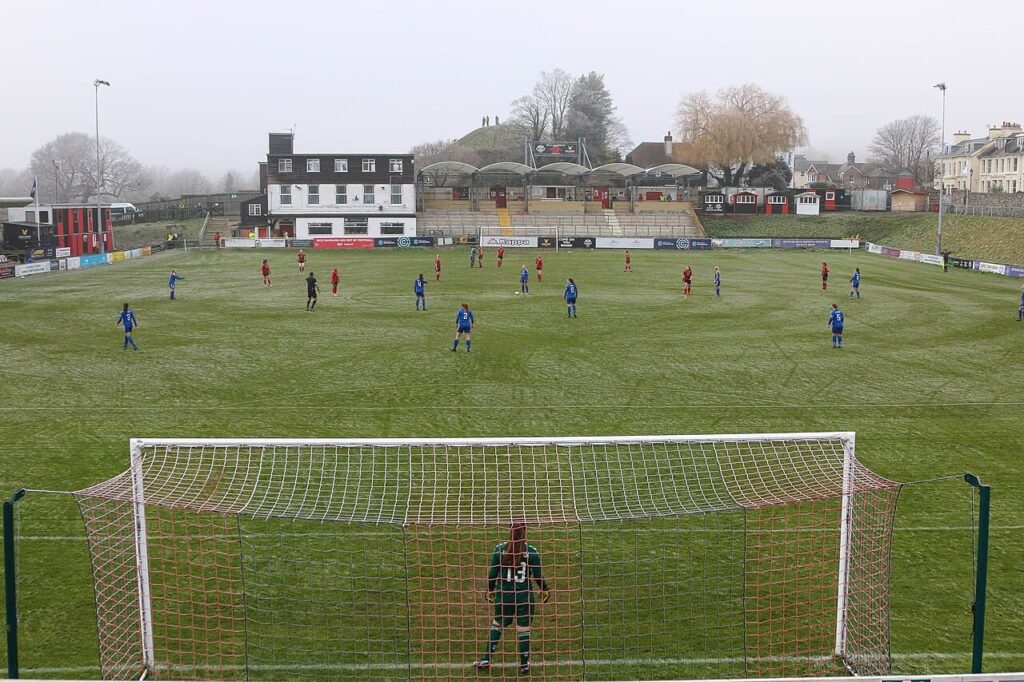
James Boyes from UK, CC BY 2.0, via Wikimedia Commons
Lewes operates at a different level from Widnes and has a much longer history as a community-owned club, so the two are not directly comparable. Even so, the example shows that a democratic ownership model still relies on a sound business plan and a community that can afford to back it over time.
When Widnes sets its initial membership targets, the numbers should be based on actual running costs rather than wishful thinking about how many people might join. The club will need to show how much money regular subscriptions can raise, how many paying members it needs, what its sponsorship income looks like and how much it expects to earn on matchdays. It will also need a financial plan for quieter spells when there are fewer home fixtures and less ticket money coming in.
Recruiting volunteers will be equally vital. Unpaid helpers reduce the need for paid staff at a small club, though a handful of people cannot carry the entire operation forever. Widnes needs volunteers with the time and practical skills to handle finance, commercial deals, administration, facilities and member communications. Calling for more help is therefore about building a capable organisation rather than filling matchday jobs alone.
A secure home is part of the sustainability question
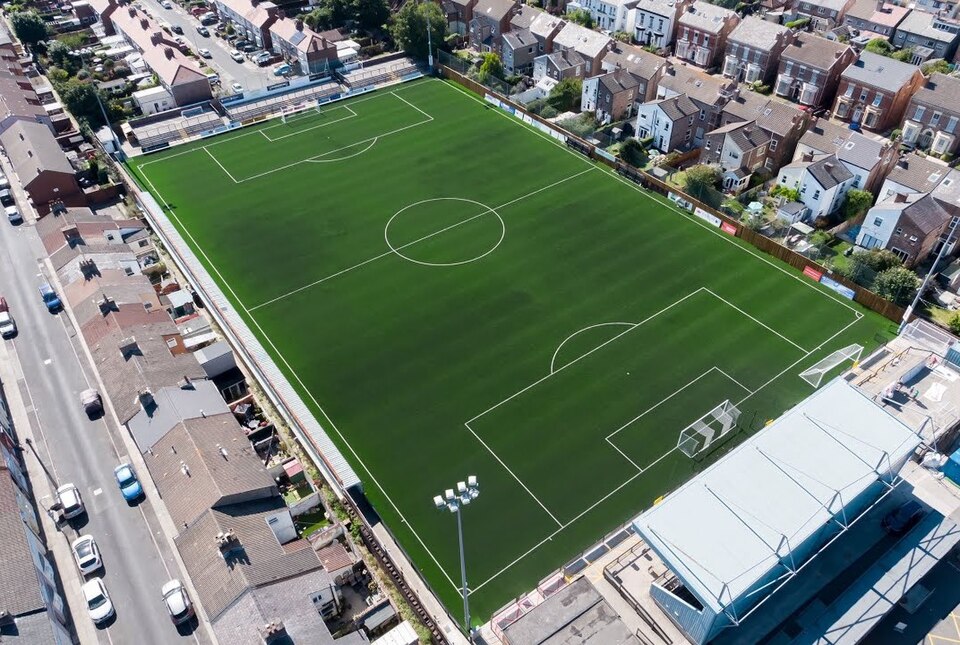
Widnes Town also needs a clear plan for where it will play its home fixtures. Right now, the North West Counties League’s club information lists the Marine Travel Arena in Crosby as its ground. Club officials have previously stated that major investment and upgrade work at Widnes’s DCBL Stadium will keep the team from playing there until early 2027.
MediaMarine, CC0, via Wikimedia Commons
Playing outside the town creates a practical obstacle for a club trying to build closer ties with its own community. Fans have to travel away from Widnes to watch home games, making it harder to turn casual local interest into regular matchday crowds. While sharing a ground elsewhere may be unavoidable during stadium works, the cost and terms of a long-term ground agreement will weigh heavily on any financial plan.
Handing the football club over to community ownership will not give fans ownership of a stadium or guarantee a long-term right to use one. As the proposed society plans for the future, it will need a clear grasp of how much its ground arrangements cost and how secure they really are.
Also Read: Ross County’s unbeaten start is just part of a wider rebuild
The next test is how many people take part
The unanimous vote on 4 November is an encouraging step for the proposal, though a show of hands in a room is different from a vote by the wider town. The club has not released figures on how many people attended the meeting, how many voted or how many paying members it expects to attract.
Those numbers will matter once the board tries to turn the proposal into a working society. A written constitution can guarantee democratic rights on paper, yet the model will only carry real weight if a broad group of people joins up, votes in elections, attends meetings and backs the club through more than one difficult season.
There is also an unanswered question about the club’s public messaging. An announcement on 21 October described the upcoming event as an open meeting with the Football Association, adding that the club had received the FA’s backing after an earlier consultation. Following the vote, the 5 November statement said the meeting had been held with the Football Supporters’ Association. The FA and the FSA are separate bodies, and the club has not publicly clarified whether both were involved at different stages.
Widnes Town’s ambition is clear enough. It wants to be a club owned by its supporters and local community rather than one relying on a single wealthy individual. That goal will only protect the club if it is matched by reliable income, skilled people to run the organisation and a stable home ground.
When the club releases its next batch of information, it will need to do more than explain how fans can buy a membership. It will have to show how those members can help build a football club that can pay its way and remain part of Widnes for the long term.