


Not long ago, London City Lionesses were finishing eighth in the second tier of English women’s football. Today they sit third in the Women’s Super League, seven points clear of Arsenal, and are preparing to play Manchester City with a chance to close the gap at the top of the table.
Their fast climb up the league is striking, yet the wider story goes beyond a promoted team enjoying a bright start to the autumn. Unlike almost every major rival in England, London City do not operate as the women’s arm of a men’s club. They are a standalone women’s organisation backed by a wealthy owner, spending heavily to compete for major trophies and build an international audience from scratch.
That approach has brought world-class players and blue-chip sponsors to Bromley. It has also turned the club into a live test case for women’s football, raising pressing questions about heavy early losses, league spending caps and how much control one owner should hold across multiple clubs.
From the second tier to the WSL’s top three
London City Lionesses were formed in 2019 after breaking away from Millwall, setting out to run as a fully independent women’s club. For their first few years, they operated in the second tier with a modest profile compared with the WSL’s heavyweight sides.
That changed in December 2023 when American businesswoman Michele Kang bought the club. London City finished that 2023-24 Championship season in eighth place on 25 points, before transforming their fortunes over the next year. They won the 2024-25 Championship title to earn a place in the WSL for the first time.
Most newly promoted teams spend their first top-flight campaign fighting to stay up, but London City finished sixth in 2025-26 with 27 points. It was the highest points tally ever recorded by a promoted team in its debut WSL season, giving the club a solid base to push higher.

Photo: London City Lionesses
Seven games into the 2026-27 campaign, they have taken another step forward. London City are third with 16 points from five wins, one draw and one defeat, having scored 19 goals and conceded eight. Chelsea and Manchester City lead the division on 19 points, while Arsenal trail behind in the chasing pack on nine points.
Seven matches are too small a sample to prove that London City can stay in a title race until May. Even so, their early results show they belong in the upper half of the table. Their match against Manchester City on 1 November will offer a clearer test of how close they really are to the league’s pacesetters.
Also Read: Ross County’s unbeaten start is just part of a wider rebuild
Putellas changes the scale of the project
Nothing captures London City’s ambition quite like the signing of Alexia Putellas. The Spanish midfielder arrived from Barcelona in July 2026 after 14 years at the Catalan club, where she won four Women’s Champions League titles and established herself as one of the greats of the modern game.
On 26 October, Putellas won the Women’s Ballon d’Or for a third time, adding to her 2021 and 2022 awards. She is only the second player to win the prize three times, matching her former Barcelona team-mate Aitana Bonmatí.
Putellas chose London City because she wanted a fresh challenge after so long in Spain, and she was drawn to an independent women’s club with the backing to match its plans. She has also spoken about wanting to help shape a growing club and build a clearer pathway for young players.
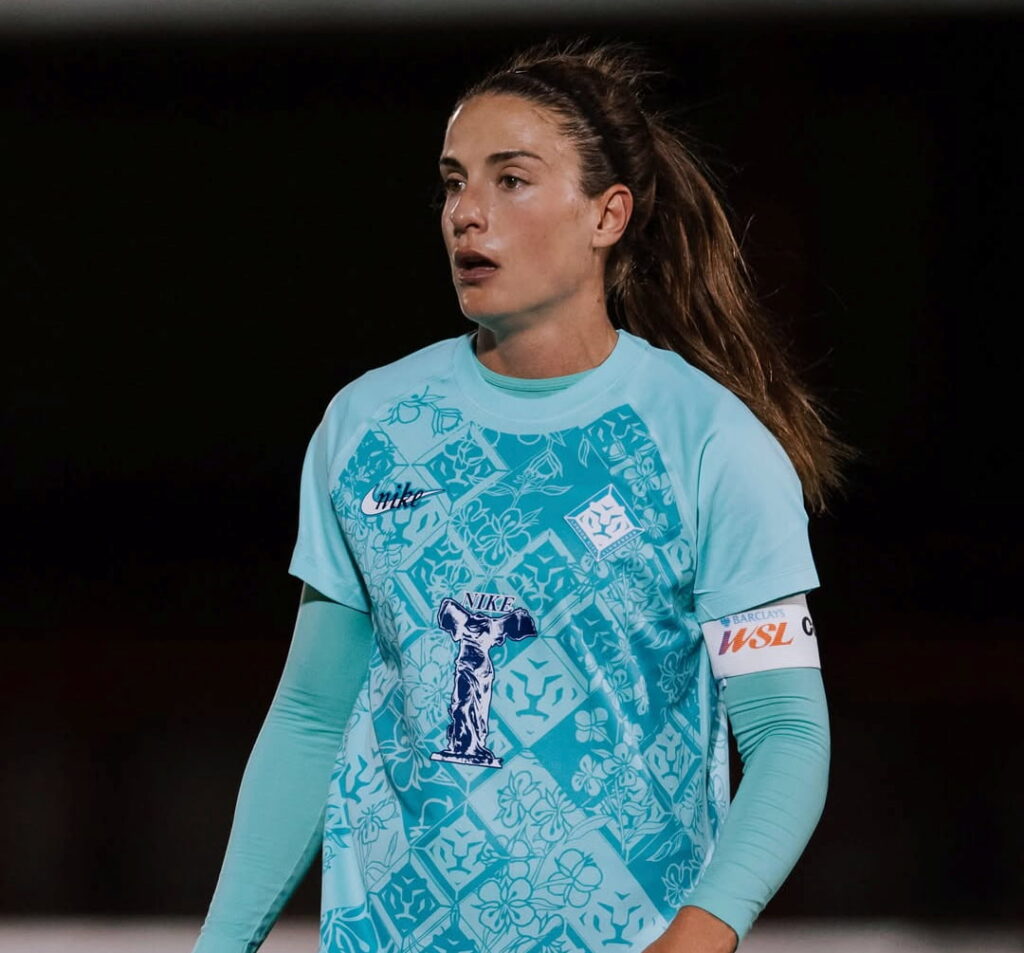
Photo: London City Lionesses
Her arrival instantly raised London City’s international profile to a level that would ordinarily take years to build. Chief executive Martin Semmens told The Guardian that the club’s Instagram account recorded 34 million hits between Putellas winning the Ballon d’Or on Monday and Thursday afternoon. Those numbers reflect total views rather than 34 million individual followers or customers, though they show the scale of online attention she brings.
Putellas is the headline name in a much wider recruitment drive. England goalkeeper Mary Earps and French forward Kadidiatou Diani have also joined, alongside several other experienced internationals who have played for top European sides.
For head coach Eder Maestre, the task is turning a group of big names from different leagues and football cultures into a settled unit with a clear style of play. Buying talented players never guarantees points on its own. Early league form suggests the squad is gelling well, though a full WSL campaign will test that cohesion far more thoroughly.
Also Read: Can Coleraine hold off Linfield in Northern Ireland’s title race?
Nike’s arrival delivers a commercial statement
London City are trying to match their on-pitch spending with rapid commercial growth. On 3 September, the club announced a multi-year front-of-shirt sponsorship deal with Nike, alongside a four-year extension to their technical kit partnership starting in the 2027-28 season.
According to the club, the agreement goes beyond shirt branding to include local community projects and research into female athlete performance. London City also described the front-of-shirt deal as the largest in women’s football, with Kang stating that it exceeds the reported $4 million annual deal signed by the new Atlanta NWSL franchise. Because neither London City nor Nike has released the exact figures, that valuation cannot be independently verified.
Regardless of the exact price tag, landing a global brand like Nike is central to how London City plan to pay their way. The club is spending heavily on star players and facilities upfront, before its commercial operation has fully matured, on the assumption that a winning team and global profiles will pull in sponsors and fans.
Turning that initial buzz into dependable revenue is the hardest part of the commercial pitch. International stars can put a Bromley-based club on the map overnight, but long-term growth depends on converting fleeting online interest into ticket sales, shirt purchases, broadcast appeal and sponsors who stay long after individual players move on.
The financial gap behind the ambition
The distance London City must travel to become self-sustaining is clear in their most recent public accounts. During the 2024-25 season, when the club won promotion from the Championship, it brought in £902,000 in revenue and recorded an operating loss of £10.6 million.
Those numbers come from the second tier and predate both this summer’s recruitment drive and the Nike agreement, so they do not reflect current income or wage bills. Even so, they show how heavily the club has relied on owner funding to build its squad and staff.
Semmens views those heavy early losses as start-up funding and says the club aims to become profitable within five years. In the wider business world, it is common for an investor to cover early losses while a young company builds its product and customer base. Football makes that transition trickier because a club cannot pause player spending to tidy up its balance sheet without risking a slide down the league table.
Hitting a five-year profitability target from a revenue base that recently sat below £1 million will take far more than one major shirt sponsor. London City will need steady growth in matchday income, merchandise, broadcast money and potential European prize funds, backed by a loyal local crowd that turns up every week rather than just for big occasions.
That leaves little margin for error. A dip in form on the pitch, injuries to marquee players or slower commercial growth could easily leave a wide gap between what the club spends and what it earns.
Also Read: Why was the Indian Women’s League delayed? What is known so far
The WSL’s financial rules add another test
League regulations also put a clock on London City’s commercial push. Under the WSL’s permitted squad salary cost rules, a club can spend up to 80 per cent of its relevant revenue on player wages, plus eligible owner cash funding of up to 25 per cent of relevant revenue or £4 million, whichever is higher.
The system is designed to let wealthy owners invest while stopping clubs from building wage bills that their underlying businesses cannot support. After a transitional period during the 2025-26 campaign, formal sanctions for breaching the salary cap take effect in the 2026-27 season.
These rules do not ban owners from putting money into their clubs, but they limit how much of that cash can be used directly for player wages. Growing commercial and matchday income is therefore essential if London City want to keep funding an elite squad within the league’s rules.
Semmens says the club has met all WSL financial regulations to date and will continue to do so. Future published accounts and the league’s annual compliance checks will show how comfortably the club’s rising income covers its enlarged wage bill.
Building facilities as well as a first team
Alongside first-team spending, Kang is putting money into permanent infrastructure. In June 2024, London City bought the 28-acre Cobdown Park site in Aylesford, Kent, to build a dedicated training centre for the senior squad and academy.
Local authorities granted planning permission for a major revamp in September 2025, and building work is now well under way. Kang told the BBC in September 2026 that the purpose-built base should open within a year, tailored specifically to female players.
Facilities have long been a flashpoint in the women’s game, where teams often share training pitches with men’s squads or make do with buildings designed for male players. Having their own complex gives London City control over training schedules, medical care and sports science.
It also gives the club foundations that outlast any single transfer window. A strong academy and training base can help attract top prospects and bring through homegrown players, which will be vital if the club wants to control transfer costs in the long run.
Also Read: Cliftonville stripped of Women’s Cup title after registration breach
One owner, three clubs and a question for UEFA
London City do not exist in isolation. Through her organisation Kynisca, Kang holds stakes in three top-flight women’s teams across major markets, combining London City Lionesses in England with OL Lyonnes in France and Washington Spirit in the United States.
Kynisca was set up as a global group focused exclusively on women’s football, aiming to keep each club rooted in its local community while sharing knowledge in scouting, sports science, player development and commercial strategy. Sharing costs and expertise across three countries can help attract investment on a scale that a single women’s team might struggle to justify alone.
However, running several prominent clubs under one roof creates an obvious headache if two of them qualify for the same European tournament. UEFA’s 2026-27 Women’s Champions League regulations tackle multi-club ownership in Article 5, stating that no person or legal entity may control or hold decisive influence over more than one club entering a UEFA women’s club competition. The rules also bar individuals from holding management or sporting roles at more than one competing club.
UEFA does not ban an owner from holding multiple clubs outright, but if two linked teams qualify for the same European competition and fail the independence test, only one is allowed to take part, based on sporting and domestic ranking rules.
If London City maintain their top-three form and qualify for Europe alongside OL Lyonnes, Kynisca will have to satisfy UEFA that the two clubs are run independently. Semmens has said London City intend to follow UEFA’s rules and believe a way can be found for both sides to play in Europe, though that remains the club’s goal rather than an arrangement signed off by UEFA. As multi-club networks become more common in the women’s game, regulators will face growing pressure to protect fair competition without choking off outside investment.
What London City’s rise could mean for the WSL
For years, the prevailing wisdom in English women’s football has been that a team needs the backing, stadium and fanbase of a major men’s club to compete at the top of the WSL. London City are challenging that assumption head-on.
If their model works, it could encourage other investors to back standalone women’s clubs and push the WSL’s traditional powers to upgrade their own facilities, marketing and player recruitment. A league where an independent side can genuinely challenge Chelsea, Manchester City and Arsenal is far healthier and more entertaining than a closed shop at the top.
Yet London City’s approach also highlights a growing wealth gap. Few clubs have an owner willing or able to absorb £10 million annual losses to get a project off the ground. If competing near the top of the WSL requires that level of personal wealth, smaller clubs could find themselves priced out, even with salary caps in place.
The club also has plenty left to prove off the pitch. Signing Ballon d’Or winners and global sportswear giants brings instant credibility, but lasting football clubs are built on local habits. London City still need to turn curious onlookers into loyal supporters in Bromley who buy season tickets and stick with the team when results dip.
Sunday’s match against Manchester City will show where Eder Maestre’s side stand on the pitch right now. The bigger verdict will take several years to arrive. We are about to find out whether heavy start-up spending can turn a standalone women’s team into a profitable top-flight force, or whether the cost of chasing the WSL’s elite remains too steep to pay for itself.