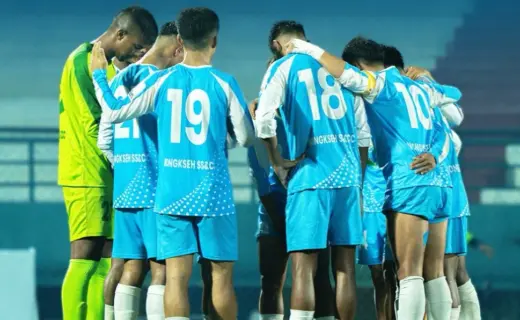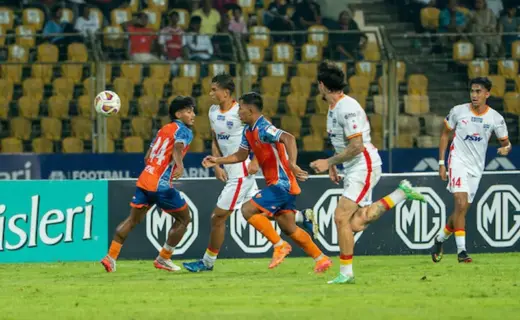

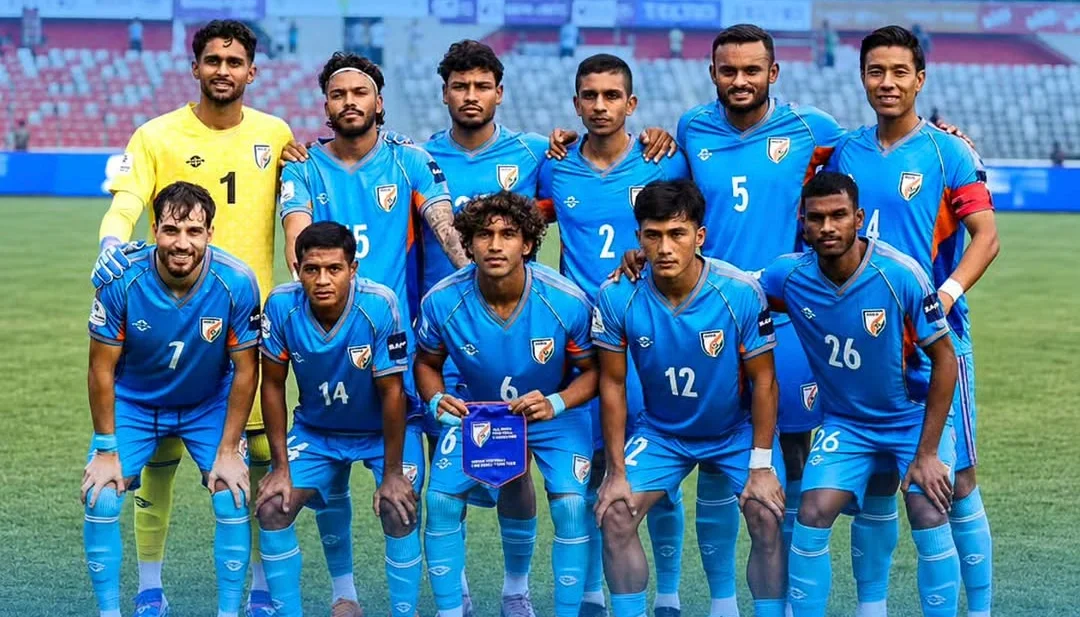
Across two days in November, India’s men’s national football teams produced two wildly different results. On November 11 in Dhaka, a young and mixed Indian line-up coached by Naushad Moosa beat Maldives 1-0 to finish top of Group B and reach the semi-finals of the 2026 SAFF Championship. Less than 24 hours later at Go Media Stadium in Auckland, Khalid Jamil’s senior side lost 5-0 to New Zealand in the opening match of a two-game friendly tour, which was also India’s first-ever men’s international fixture in the country.
Those two scorelines tell only part of the story. Behind the scenes, the All India Football Federation, or AIFF, had to run two international campaigns at once with separate coaching staffs, overlapping player pools and a domestic league schedule that clashed with the start of the regional tournament in Bangladesh.
Although the two squads were prepared separately, the player pool remained connected. Three players originally selected for the SAFF Championship left Dhaka to join Jamil’s 23-man party for New Zealand, while three others were released back to their domestic club.
How the federation Pieced these two squads together, and how both teams performed under very different conditions, offers a revealing look at the true state of India’s squad depth, its reliance on club cooperation and the uncertain bridge between promising reserves and the senior national team.
Why the calendar forced a split approach
India’s two November assignments came with very different demands. Jamil took a 23-player senior squad to New Zealand for two friendlies during the official international window, describing the trip as a stern test against an opponent with recent FIFA World Cup experience.
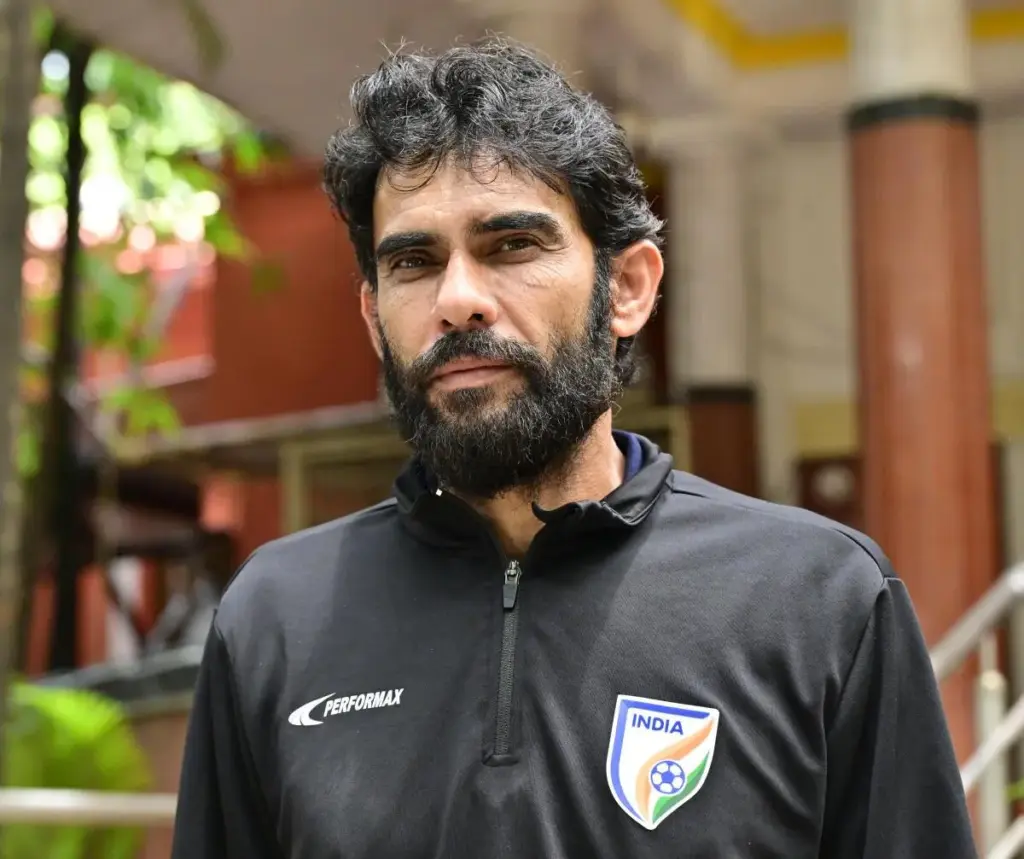
Meanwhile, Moosa, who serves as head coach of India’s U23 men’s team, was placed in charge of the senior international campaign at the SAFF Championship in Bangladesh alongside assistant coach Bibiano Fernandes. Moosa’s roster brought together younger prospects, national-team reserves and players who had worked under him before.
The main headache for the federation came down to the FIFA men’s international match calendar. FIFA’s November 2026 window ran from November 9 to 17, but India’s SAFF Championship opener against Pakistan fell on November 5, four days before the window opened.
Because clubs are not required by FIFA rules to release players outside an official window, the AIFF could not simply call up a full squad on time. Instead, the federation had to negotiate early releases with Indian Super League clubs. When the AIFF named a 28-player SAFF squad on October 30, it confirmed that only 18 players would travel from Kolkata to Dhaka on November 3, while the remaining 10 would arrive over the following days.
That staggered arrival shaped India’s preparation from day one. According to a report in The Times of India published on October 30, Moosa expected to have 18 players available for the Pakistan match on November 5, with the other 10 joining before the second group fixture against Maldives on November 11.
The newspaper reported that Mumbai City FC, Kerala Blasters and Punjab FC agreed to let their players leave outside the FIFA window because those clubs had no league matches scheduled on November 5. Mohun Bagan also agreed to release Suhail Ahmad Bhat, Abhishek Suryavanshi and Priyansh Dubey after its league match against Punjab FC on October 31. Because there was no time for a full training camp, Moosa leaned on footballers who already knew his methods or could settle in quickly.
The AIFF publicly thanked the clubs for releasing players early. That gratitude showed a plain reality of Indian football scheduling. Fielding a competitive team in Dhaka depended on goodwill and fixture gaps in the domestic league rather than guaranteed access to the coach’s first-choice group.
Also Read: Why FC Goa’s refereeing complaint tests AIFF accountability in the club-led Indian Super League
How squad changes linked Dhaka and Auckland
Even after both campaigns got underway, the squads kept shifting. The clearest link between the two teams appeared on November 6, when the AIFF announced Jamil’s 23-man squad for the New Zealand tour. Three players from Moosa’s original SAFF list, Bijoy Varghese, Muhammad Suhail and Liston Colaco, were called up to the senior side and left the tournament in Dhaka to travel to Auckland.
Their departure forced immediate adjustments in Bangladesh. Bijoy Varghese had captained India in the opening win over Pakistan on November 5, so Chinglensana Singh Konsham took over the armband against Maldives. Muhammad Suhail had also played against Pakistan before switching campaigns, while Liston Colaco had been named in the initial tournament group.
At the same time, Farukh Choudhary, Noufal PN and Hmingthanmawia Ralte were released from the SAFF squad and returned to Mumbai City FC. Another member of the original 28-player selection, Ronney Kharbudon, did not travel to Dhaka because of an injury. Jamil’s squad also required a late change on November 10, when Kerala Blasters confirmed that Mohammed Sanan had been called up to replace the injured Edmund Lalrindika.
Not every move has a public explanation. While the AIFF confirmed that Choudhary, Noufal and Ralte went back to Mumbai City FC, the federation did not give individual reasons for their release. Nor has it set out a detailed explanation for pulling Varghese, Suhail and Colaco out of the SAFF Championship to join Jamil’s tour. Rather than pointing to a settled selection policy, the changes show a federation adjusting both squads on the fly as the requirements of each trip became clearer.
Grinding out results in Dhaka
Despite arriving in batches and losing key players after the opener, Moosa’s group found ways to win in Bangladesh. India started Group B on November 5 with a 3-2 victory over Pakistan. Suhail Ahmad Bhat struck twice early on, scoring in the 13th and 19th minutes, before Manglenthang Kipgen added a third goal in the 31st minute. India looked comfortable for most of the contest, only for Pakistan to score twice in stoppage time and turn the closing moments into a nervy scramble.
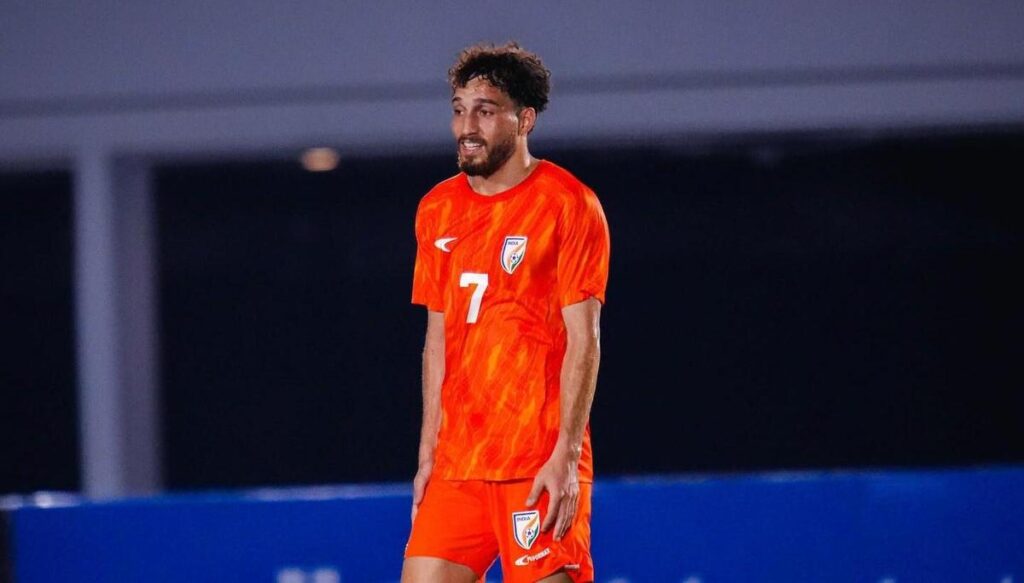
Moosa praised his players for their attacking intent and work rate after the match, though he noted that conceding twice late on showed a need for better concentration and game management. He also pointed to the practical challenge of folding incoming players into the group while building team coordination and defensive structure between matches.
Six days later against Maldives, Moosa tested the depth of his squad by making seven changes to the starting line-up. Only four starters from the Pakistan match, Abhishek Suryavanshi, Muhammed Uvais, Suhail Ahmad Bhat and Ricky Shabong, kept their places. Bhat proved decisive once again, converting a 38th-minute penalty for his third goal in two games after Abdul Rabeeh was fouled inside the box.
Holding onto that 1-0 lead required late heroics from goalkeeper Priyansh Dubey. Dubey kept out a free-kick from Ali Hamdhaan in the 79th minute and stopped an effort from Muzdhaan Hassan in the 84th minute. His most important save came in stoppage time, when he rushed off his line to block a close-range shot from Ethan Ibrahim Zaki.
Two wins from two matches gave India six points and top spot in Group B. Pakistan advanced in second place with three points, while Maldives went home without a point. Moosa showed he could rotate most of his starting eleven and still get a result, even if late pressure in both games revealed defensive rough edges.
Also Read: What the FAI record-keeping controversy means for Irish sport
A harsher reality against New Zealand
While the SAFF squad was celebrating qualification for the knockout stage, the senior team ran into a far tougher level of football in Auckland on November 12. Playing at home with a side that had competed at the 2026 FIFA World Cup, New Zealand beat India 5-0.
India fell behind in the fifth minute when a scramble inside the penalty area ended with an own goal by Bijoy Varghese. Jesse Randall then scored twice before the interval, finding the net in the 34th and 43rd minutes to put the hosts three goals clear at half-time. New Zealand kept up the pressure in the second half as Chris Wood headed home in the 57th minute and Lachlan Bayliss scored with a volley in the 74th minute.
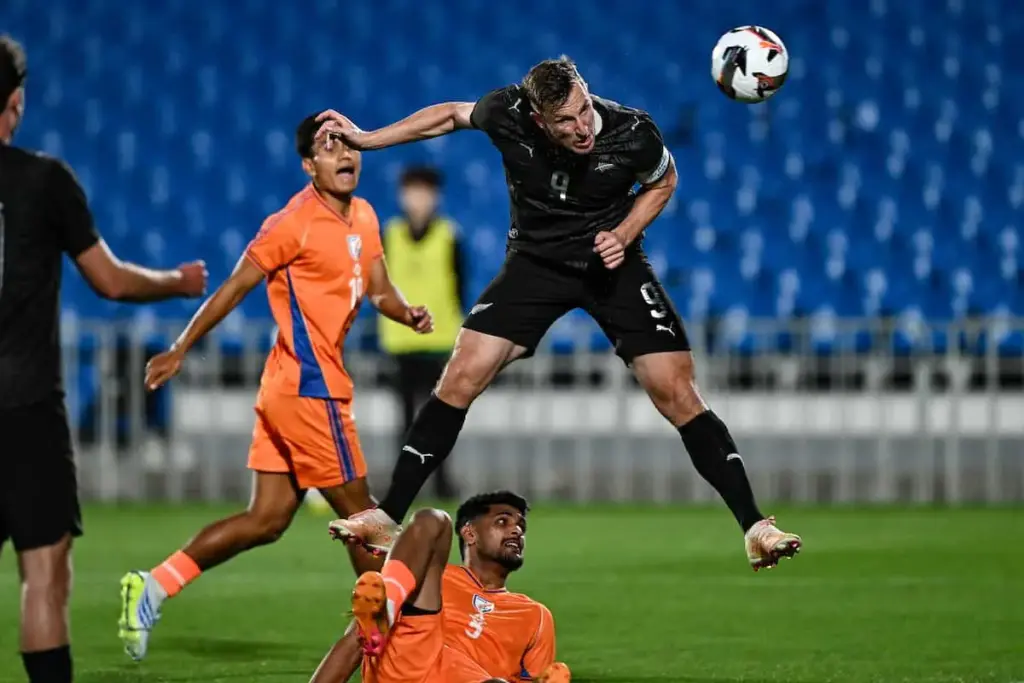
The defeat would have been heavier without goalkeeper Vishal Kaith. Kaith made several important stops throughout the match, including saving a 78th-minute penalty from Bill Tuiloma and recovering quickly to block the rebound. Outside of Kaith’s resistance in goal, India struggled to handle New Zealand’s pace and movement, created very few clear chances and left too many gaps at the back.
Jamil responded to the one-sided first half by making five substitutions at the break. Those changes, along with later substitutions including Mohammed Sanan, gave four Indian players their first taste of senior international football. Muhammad Suhail and Ricky Meetei Haobam came on at half-time for their senior debuts, and David Lalhlansanga and Tomba Singh Haobam followed later in the second half to earn their first caps.
What the two campaigns reveal about India’s player pool
It would be a mistake to judge the two squads by simply comparing their scorelines. Winning two tight group matches against Pakistan and Maldives in a regional tournament is a completely different task from playing away against a World Cup team like New Zealand.
Even so, the two campaigns together tell us plenty about where Indian football stands. The SAFF group stage showed that India has a broader pool of domestic players who can compete within South Asia, even with disrupted preparation and heavy rotation. Individual displays from Bhat up front, Kipgen against Pakistan and Dubey in goal against Maldives gave Moosa’s team enough quality to top its group.
At the same time, relying on three late saves from Dubey to beat Maldives shows that winning at regional level does not automatically mean India possesses a ready-made second string for bigger tests.
In Auckland, handing debuts to Muhammad Suhail, Ricky Meetei Haobam, David Lalhlansanga and Tomba Singh Haobam widened the group of players with senior international experience. Moving Varghese, Suhail and Colaco from Dhaka to New Zealand also proved that the two squads were linked in practice, especially in the case of Suhail, who played in the win over Pakistan before winning his first senior cap under Jamil a week later.
What remains unclear is whether those connections are part of a long-term plan. The AIFF has not publicly explained whether using Moosa and a mixed squad at the SAFF Championship is meant to establish a regular development route into Jamil’s senior team, or whether it was simply an improvised fix for a difficult calendar. A genuine pathway requires consistent tracking, clear selection standards and repeat opportunities for young players against stronger opponents.
The same question applies to how the federation works with domestic clubs. Getting early releases from several Indian Super League sides rescued India’s preparation for the Pakistan match, yet it also exposed how fragile national-team planning becomes when tournament dates clash with league football. Closer scheduling coordination between the AIFF, domestic clubs and tournament organisers will be needed to avoid similar scrambles in future windows.
Also Read: EFL’s new financial rules face their first test while the PFA legal challenge remains unresolved
Immediate tests and a longer question
Both teams still have work to do before the November window closes. Defending champions India stay in contention for a tenth SAFF Championship title and will play Bhutan in the semi-final at the National Stadium in Dhaka on November 14. A day later on November 15, Jamil’s senior side will face New Zealand in a second friendly in Christchurch.
For Moosa, the semi-final against Bhutan is a test of whether his rotated squad can control a knockout match and avoid the late defensive lapses that nearly cost them against Pakistan and Maldives. For Jamil, the Christchurch match is a chance to tighten India’s defensive shape after the 5-0 loss and take another look at the newer faces in his squad.
Neither campaign offers a neat, single verdict on Indian football. Two narrow wins in Dhaka do not prove that India’s reserve pool is thriving, and a heavy defeat against a World Cup side in Auckland does not render the wider player pool useless. Instead, this split November window began as a practical solution to a crowded calendar and ended up giving dozens of Indian players international minutes at two very different levels.
Whether this experiment leaves a lasting mark will depend on what happens next, and whether the players tested in Dhaka and Auckland remain part of India’s senior plans once the calendar returns to normal.