
Heading into an 8 November 2026 match against PSV Eindhoven, SC Cambuur looks like a club thriving in its return to the Dutch top flight. Unbeaten in five games after racing to a 4-0 lead over Go Ahead Eagles on 31 October before away fireworks forced a late abandonment, head coach Johan Plat’s promoted side sits ninth in the Eredivisie with 15 points from 11 fixtures.
Inside the club offices, the picture is far more complicated. On 4 November, Cambuur published its 2025/26 annual financial statements, reporting a net accounting loss of €2.18 million for the year ended 30 June 2026. Winning automatic promotion as second-tier runners-up in May brought Eredivisie football back to Leeuwarden, yet it is also exposing severe financial pressure tied to the 15,000-seat Kooi Stadion.
That loss followed a strong year on the pitch and in the transfer market. Operating turnover grew by €2.0 million to €12.5 million during Cambuur’s first full season at the Kooi Stadion, while player sales including Benjamin Pauwels, Bryant Nieling and Tyrique Mercera brought in over €4.0 million.
Still, Cambuur missed an operating profit because transfer cash went toward mid-season signings, promotion bonuses and the Heeren van Cammingha player fund, which entitles private backers to up to €1.5 million of transfer gains through 2034. Public filings do not state how much of that cap remains.
The real cost of the Kooi Stadion
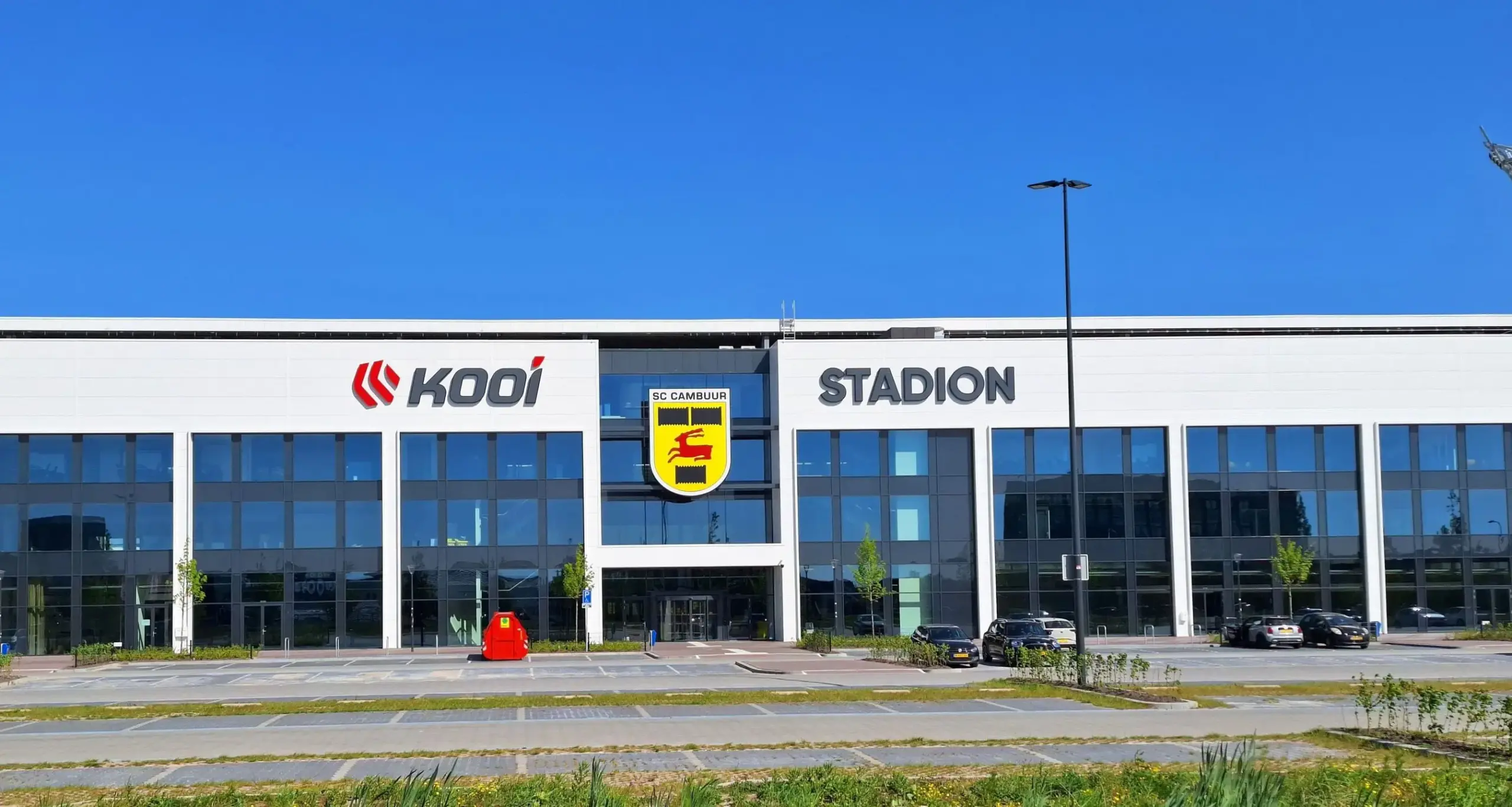
Cambuur opened the Kooi Stadion in August 2024 to replace its cramped 10,250-capacity Insulindestraat ground, where surrounding streets blocked expansion. Planned in 2013 as a €25.0 million stadium at Elfstedenpark, the project grew over a decade of contractor disputes, pandemic delays and rising material costs into a wider complex with the Firda vocational school and commercial units, costing between €45.0 million and €67.0 million.
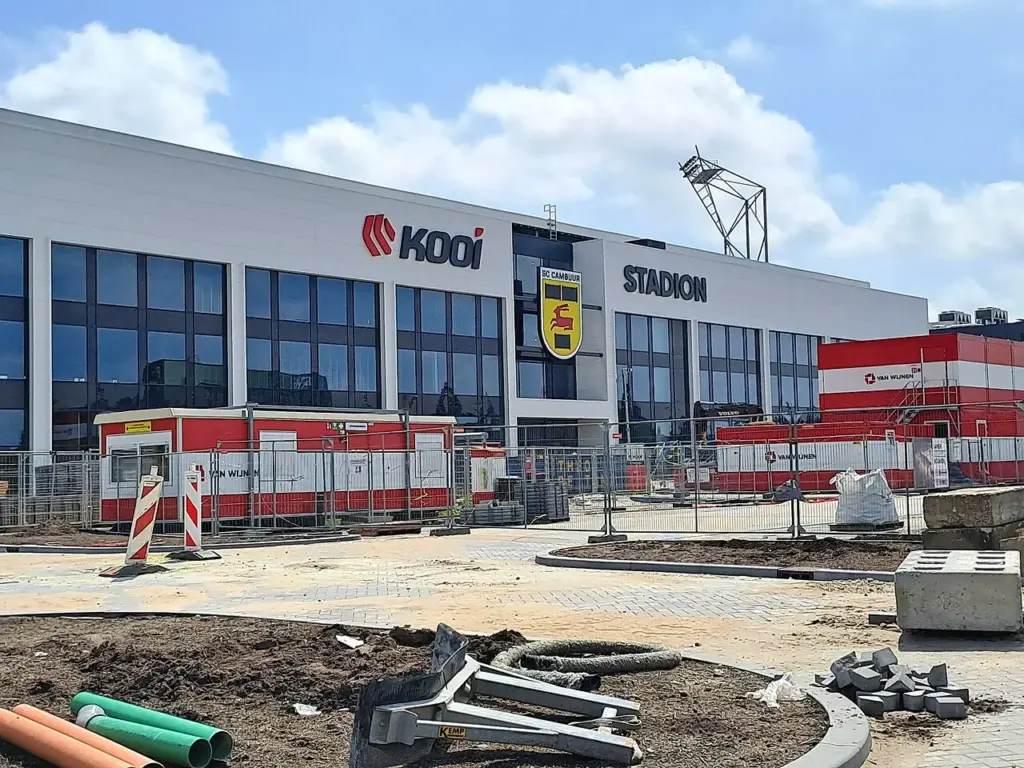
While a modern ground raises ticket and sponsorship potential, it also brings fixed bills. Even the commercial gains started slowly, missing last season’s budget by €1.0 million because unfinished skyboxes could not be leased on schedule and an incomplete kitchen required expensive outside matchday caterers.
To fund its share, Cambuur borrowed over €30.0 million from public and private lenders. During the 2024/25 move, when Cambuur lost €3.6 million and spent nearly €2.0 million on relocation, total balance sheet liabilities briefly hit €45.0 million by combining unpaid short-term bills with long-term loans.
By 30 June 2026, long-term debt stood at €36.5 million, mainly in stadium mortgages and loans from the Municipality of Leeuwarden, naming-rights partner Pieter Kooi and developer Bert van den Brink. The city holds a €14.0 million loan and about €20.0 million in total public exposure, though public records do not state whether municipal or private loans take legal priority or if the ground is pledged as collateral.
For Cambuur, the immediate threat is cash liquidity rather than last season’s accounting loss. An accounting loss measures annual income against expenses on paper, whereas liquidity means having cash in the bank to pay bills due now. Beyond €1.5 million in annual interest, Cambuur owes over €2.0 million in loan repayments during 2026/27.
That €3.5 million debt bill absorbs nearly 28% of revenue, almost triple the 8% to 12% share that established Dutch clubs like PSV spend on their grounds.
Also Read: Is Lommel SK finally delivering on City Football Group’s plan?
Why the club urgently needs investment
Those loan bills sparked a boardroom revolt in June 2026, when the Royal Netherlands Football Association (KNVB) required a recovery plan backed by a €4.9 million guarantee by 15 June. Asked to step in for a fifth time, Kooi refused in a Leeuwarder Courant interview, calling Cambuur “a glorified amateur club with an enormous stadium” and comparing himself to a fire brigade.
Within 48 hours, the Supervisory Board resigned. Kooi then bought €2.9 million in equity certificates, cutting Cambuur’s negative net equity, where total debts exceed total assets on paper, from €1.18 million to about €480,000. The club appointed Jesse Bergsma as general director in the summer and John van Teijen as financial director in October.
When the accounts came out on 4 November, Bergsma told Omrop Fryslân and the Leeuwarder Courant that “the situation is extremely urgent” and involves millions of euros rather than tens or hundreds of thousands. Calling this season’s repayments a “heavy sacrifice,” he said Cambuur needs three to five years to grow commercial revenue and clear its deficit.
Cambuur’s Foundation Board and the municipality paid €300,000 to hire consultancy Hypercube Business Innovation, whose restructuring plan will go before creditors and local investors at a meeting in late November 2026.
While Hypercube’s exact terms remain confidential and no new funding is confirmed, Cambuur hopes to convert debt into non-voting equity certificates, cut interest rates, extend loan maturities and form a business pool to cover this season’s repayments. Without an agreement, the club risks running short of cash before the fiscal year ends.
Why promotion alone cannot fix the problem
Playing in the Eredivisie lifts Cambuur’s central television and commercial payout to about €3.4 million in 2026/27, up €2.4 million from the €1.0 million earned in the second division, while full stands against Ajax, Feyenoord and PSV boost matchday income.
Yet that extra broadcast money does not cover the annual stadium debt bill, and competing in the top division brings steep new costs. Staying up typically requires a €6.0 million to €8.0 million first-team budget, forcing Cambuur to raise wages and sign players like Bilal Ould-Chikh. With wages and stadium debt taking over 85% of revenue, the club still relies on player sales to fund everyday operations.
Remaining in the Eredivisie is still crucial because relegation under the current debt load would be far worse. Dropping down would cut television money to €1.0 million and reduce ticket and commercial income by an estimated 25% to 35%, pushing revenue below €9.0 million while fixed loan payments stay unchanged.
Without debt relief, relegation could create an annual shortfall above €4.0 million and force court-supervised debt restructuring, known in the Netherlands as a WHOA procedure.
Also Read: London City Lionesses’ rapid rise tests the future of the WSL
KNVB oversight and a wider Dutch dilemma
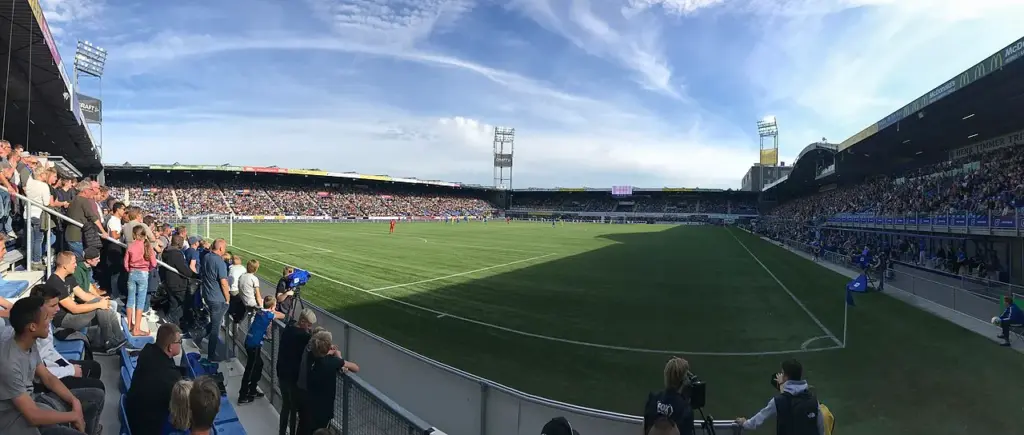
Because of its fragile balance sheet, Cambuur operates under close oversight from the KNVB, which grades clubs on a 40-point scale across six financial tests. Scoring 15 points or fewer puts a club in Category 1 supervision under a formal recovery plan.
Cambuur scored just 6 points. Under Category 1 rules, the club needs KNVB permission for major budget changes or player signings and must cut its negative equity by at least 10% annually. Kooi’s summer investment met that 10% rule and avoided a points penalty for now. While spring 2027 interim targets are not public, breaking the recovery plan could bring fines, point deductions or license loss.
Cambuur’s predicament reflects a wider trap for mid-sized Dutch clubs. Because Eredivisie broadcast money is shared using a ten-year ranking that pays traditional powers more than triple the base sum of promoted sides, smaller clubs face a hard choice between outdated grounds and heavy building debt.
In recent years, stadium debt forced FC Twente into a €32 million municipal bailout, lease costs contributed to Vitesse losing over 25 points, and venue bills pushed ADO Den Haag into court restructuring. By contrast, PEC Zwolle escaped Category 1 between 2021 and 2024 after regional investors converted debt into equity and the club tightly controlled wages.
Whether Cambuur can follow PEC Zwolle’s example depends on the late-November talks. As Leeuwarden Alderman Hein Kuiken told Omrop Fryslân in August, the city has both a business stake in Cambuur and an interest in protecting a symbol of local identity.
Plat’s players have earned points on the grass, but Cambuur’s survival in the Eredivisie will be decided when creditors choose whether to turn their loans into long-term support.