
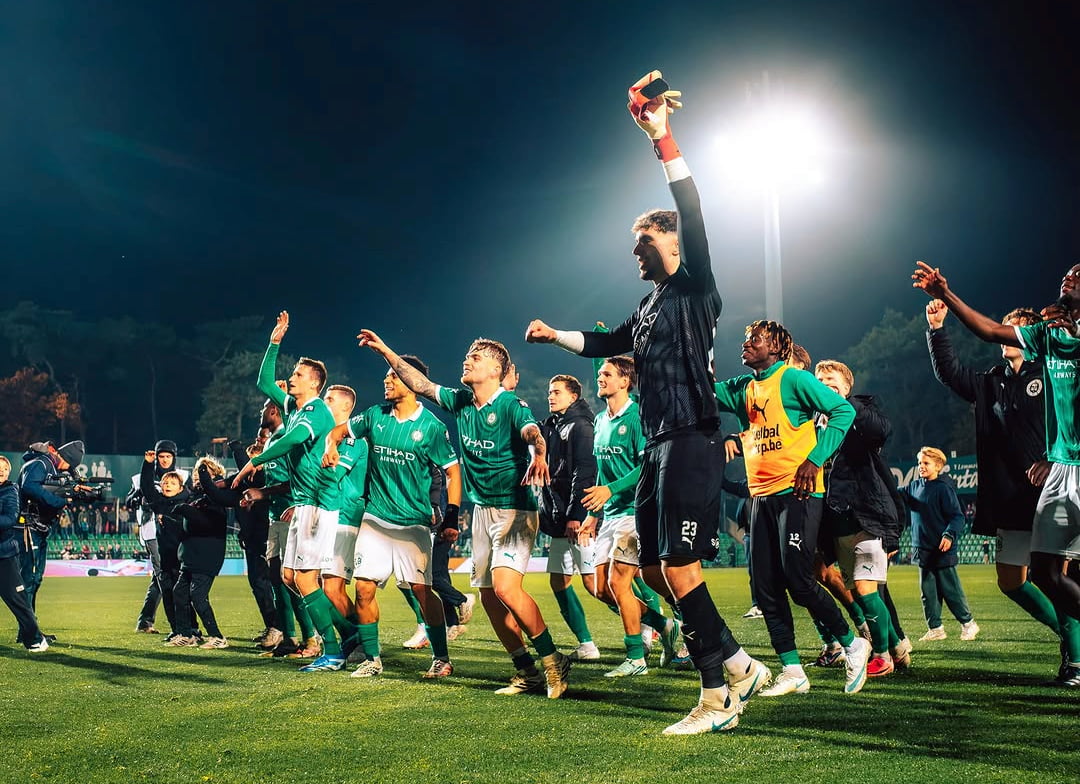
For more than an hour at the Soevereinstadion on 1 November, Lommel SK looked like a newly promoted side learning just how unforgiving Belgium’s top division can be. KAA Gent had arrived unbeaten after nine league matches, carrying eight wins, one draw and 25 points, and they spent the opening half-hour pinning the hosts back.
Abdelkahar Kadri flicked a Momodou Sonko cross against the post, Tiago Araujo and Kadri both sent efforts narrowly wide, and Lommel goalkeeper Matthias Pieklak had to make sharp saves to deny both Kadri and Max Dean.
Even when Gent midfielder Mathias Delorge was shown a straight red card before half-time, a VAR review downgraded the punishment to a yellow card and left the visitors with eleven men.
Lommel steadied themselves after the interval. Gent goalkeeper Davy Roef was forced into a save from Tom Reyners, Siebe Van der Heyden cleared a Sverre Nypan shot off the line, and Pieklak produced another vital stop to keep out Dean from close range. Then Lommel’s bench changed the match. Juho Talvitie, introduced in the 67th minute, broke the deadlock in the 82nd minute.
Five minutes later, fellow substitute Dorde Gordic, who had come on in the 76th minute, scored a second to seal a 2-0 victory and hand Gent what their official match report confirmed was their first league defeat of the campaign.
After ten matches of their first top-flight season since 2003, Lommel sit seventh in the Jupiler Pro League on 15 points, level with sixth-placed KRC Genk. Four wins, three draws and three defeats, with 13 goals scored and 11 conceded, represent a respectable return in a tightly packed table. Yet one victory over a leading Belgian club does not settle the central question surrounding Lommel.
Six years after City Football Group bought the club, and after substantial financial restructuring, is the project finally building a team and a business that can last at this level?
From local roots and survival to the multi-club era
Lommel was not built from scratch in a corporate boardroom. The club traces its roots back to 1932 and evolved through several local sides and restructurings, including the 2010 merger that formed Lommel United. Financial and sporting struggles have long been part of that story.
Relegation in 2017 cost the club its professional status before it fought its way back into the professional ranks. When City Football Group, the parent company of Manchester City, completed its takeover in May 2020, Lommel were playing in the second tier and had only just secured the licence required to stay in professional football.
At the time of the purchase, CFG said the deal would expand its international network while supporting the development of clubs, academies and players. The group pointed to Lommel’s local culture, existing facilities and tradition of youth development, promising a two-way exchange of expertise across its network.
Linking a small Belgian club to the owners of Manchester City naturally raised outside expectations. Even if CFG framed the takeover as a long-term development project rather than an instant promotion push, taking six seasons to climb out of the second tier invited scrutiny.
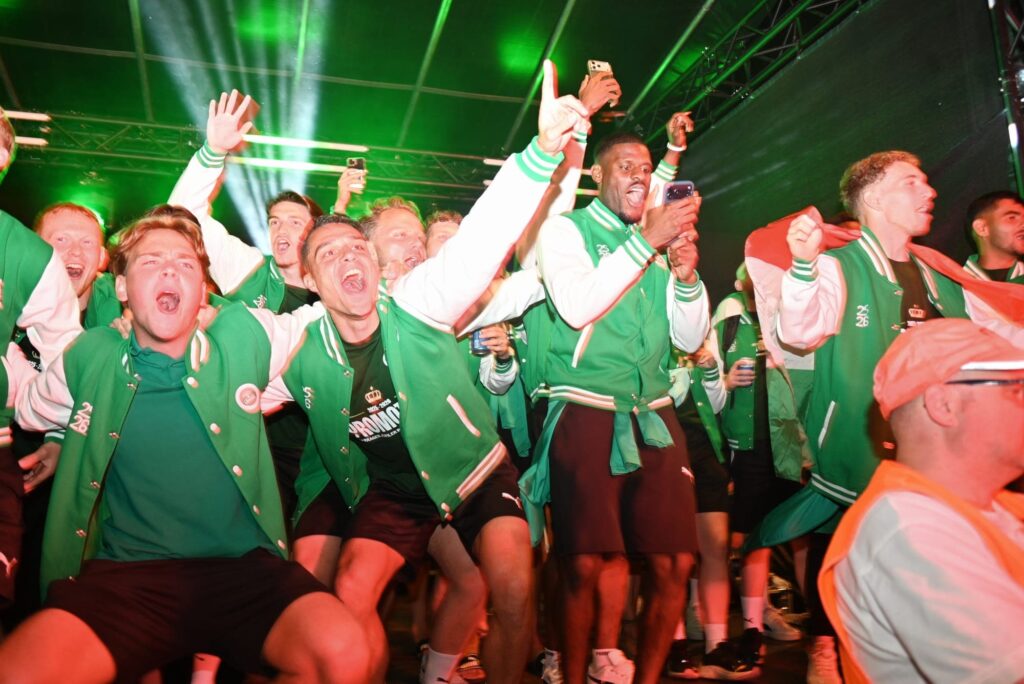
When promotion finally arrived in May 2026, it had to be earned the hard way. Lommel narrowly missed out on second place and automatic promotion in the Challenger Pro League, forcing manager Lee Johnson’s side into the play-offs. They knocked out RFC Liège and Beerschot to set up a two-legged final against top-flight opposition in FCV Dender.
A 3-2 home win at the Soevereinstadion followed by a 0-0 draw away ended a 23-year absence from the Jupiler Pro League, where the club’s highest previous finish remains fifth place in the 1996/97 season.
Credit: Jan Buyens
Speaking to BBC Sport in June 2026, Johnson described moving to Belgian football as a major adjustment and warned that the top division would be a big step up. For Lommel to become sustainable at that level, he said, the club would need to make smart decisions.
Also Read: Ross County’s unbeaten start is just part of a wider rebuild
What €98.8 million in capital injections actually means
The debate around how long it took Lommel to reach the top flight sharpened on the same day they beat Gent. Speaking on the programme Ongefilterd on 1 November, in comments reported by Walfoot and other Belgian outlets, former Belgium goalkeeper Stijn Stijnen argued that a club backed by roughly €100 million over five seasons should have won promotion much sooner.
Stijnen also recalled a prediction he attributed to former Anderlecht manager Vincent Kompany that Lommel would quickly become a major rival, though that remark has not been independently verified in the public reporting reviewed for this article and remains Stijnen’s recollection. Public reports up to 3 November did not include a response from Lommel or CFG to Stijnen’s comments.
Stijnen’s criticism tapped into real numbers, but those figures need careful separation. On 27 October 2026, local outlet Internetgazet reported that CFG had completed a €23 million capital increase at Lommel, taking the owner’s cumulative capital injections since May 2020 to €98.8 million.
However, that €23 million operation was not a fresh cash transfer chest for signing players. It was a debt-to-equity conversion that turned money Lommel already owed its shareholder into share capital, reducing the club’s debt to CFG and cleaning up its balance sheet. It followed an €18 million capital increase at the end of 2025 and a separate €65 million capital reduction used to write off historical losses.
These balance-sheet measures cannot be added together as if they were a single cash budget, and the €98.8 million in cumulative capital injections does not represent the amount spent on transfer fees.
What the club’s published accounts do show is a business that has spent far more than it earns. For the financial year ending 30 June 2025, Lommel recorded a net loss of €20.9 million, more than double the €8.5 million loss from the previous year. Over the same period, turnover stood at just €3.7 million while personnel costs reached nearly €16.9 million, leaving the club with negative equity of €4.5 million.
While the public accounts do not break down how much money went specifically to first-team wages, transfer fees, academy operations or wider administration, they make clear how heavily Lommel have relied on CFG to cover operating shortfalls.
Inside the club, executives had already admitted that the original spending model was not working. In a February 2026 interview with Het Nieuwsblad, financial director Nick Rondelez called the losses very poor and said he was not proud of them. He explained that Lommel had initially focused on signing young players to long, expensive contracts, and had since changed tack to bring its operating model closer to other Challenger Pro League clubs, while cautioning that the turnaround would take time.
Rondelez also stated that CFG’s capital increases were based on the club’s practical funding needs, dismissing suggestions that the sums were designed simply to pass financial fair play rules as a coincidence.
Also Read: Club Brugge want to keep Nicolò Tresoldi despite €60m transfer talk
The academy, the network and a new leadership phase
Credit: Lommel SK
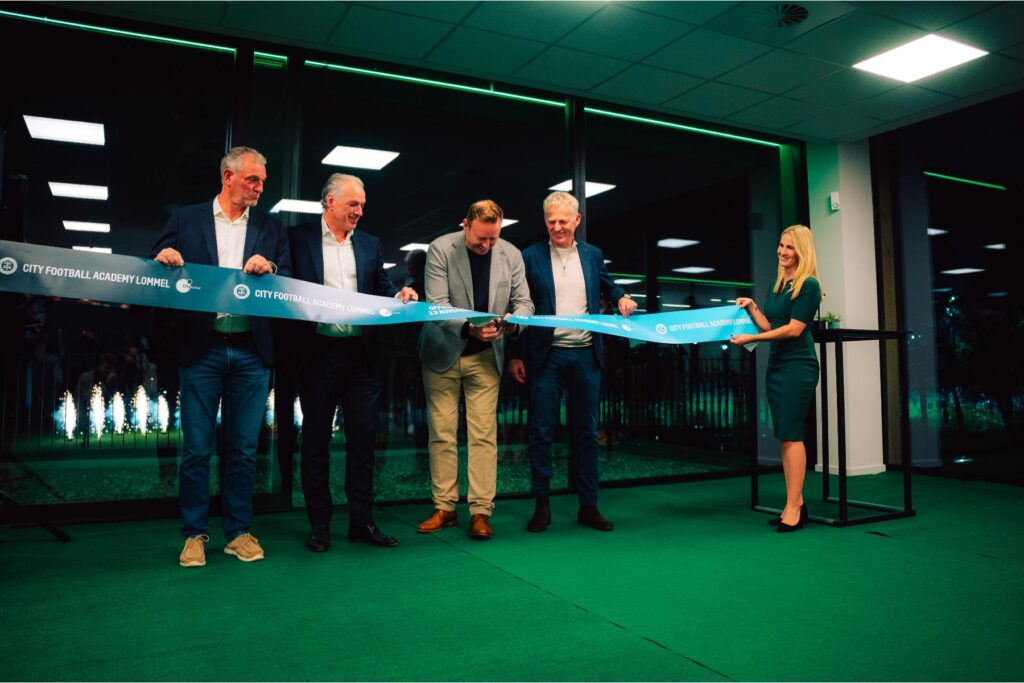
If the balance sheet shows the cost of CFG’s ownership, the clearest physical return is the City Football Academy Lommel, which opened on 13 November 2025. Built in partnership with the City of Lommel, which viewed the project as a boost for local youth opportunities and the town’s economy, the complex brings training pitches, rehabilitation rooms, video analysis suites and sports science support onto a single site. It serves the first team, coaching staff, club employees and elite youth sides.
At the opening, then-CEO Mattijs Manders said the facility would raise training standards, strengthen the club’s performance culture and shorten the path from youth football into the senior side. Roel de Vries, then CFG’s group chief operating officer, added that the centre would help Lommel apply the group’s shared football knowledge, performance support and data-led methods.
Even so, bricks and pitches only prove their worth over several seasons. The academy will ultimately be judged on how many homegrown players reach Lommel’s first team and reduce the need for constant squad rebuilding.
For now, Lommel’s squad relies on a blend of CFG pathways and outside deals. Midfielder Sverre Nypan arrived on loan from Manchester City, while Isaiah Dada-Mascoll joined from City’s under-21 squad. Connections with sister clubs brought Stredair Appuah from Palermo and Elijah Odede from Troyes. Outside the group, Lommel signed Don-Angelo Konadu on a season-long loan from Ajax with an option to buy, alongside other independent additions.
Using loans and group pathways gives Lommel access to promising young footballers without always paying permanent transfer fees, and the late goals from substitutes Talvitie and Gordic against Gent showed the value of that squad depth. The risk is instability. When key loanees return to their parent clubs or developing talents move up the football pyramid at the end of a campaign, a club can find itself rebuilding its spine every summer.
Managing that delicate balance now falls to Rondelez. In August 2026, Manders announced he was stepping down as CEO after two seasons to take on a new challenge closer to home. CFG thanked Manders for overseeing both the academy opening and promotion, as well as strengthening the club’s sporting structure and daily operations, and there was no indication in official statements that his exit stemmed from internal disagreement.
To maintain stability, Rondelez stepped up from his role as corporate service and financial director to serve as interim CEO. Having the man who publicly critiqued the club’s past losses now running daily operations puts financial discipline and squad building under the same roof.
Also Read: Can Coleraine hold off Linfield in Northern Ireland’s title race?
Beating an unbeaten Gent side showed that Lommel belong on the same pitch as Belgium’s top clubs on a given afternoon. Turning that night at the Soevereinstadion into lasting success is a much harder job. To prove that CFG’s investment has built more than an expensive stepping stone, Lommel must keep picking up top-flight points, bring through their own academy graduates and narrow the gap between what the club earns and what it spends.