
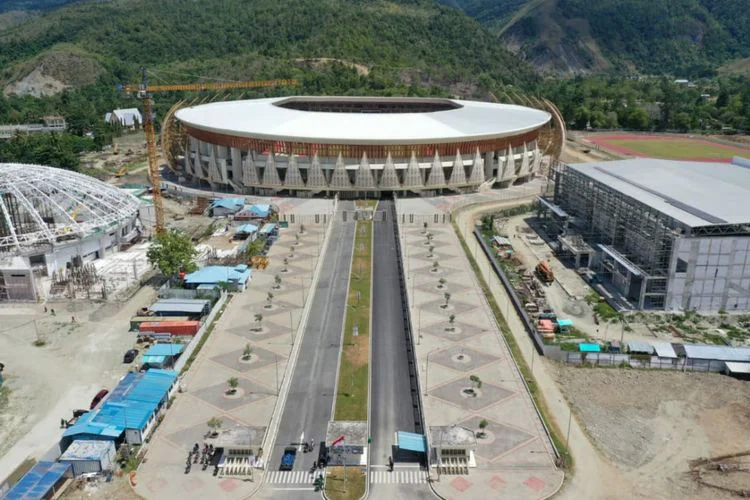
Persipura Jayapura are finally going home, though the strict conditions surrounding their return show how much has changed since they last played in Papua.
On 8 November, the club confirmed it will return to Stadion Lukas Enembe in Sentani for the second phase of the 2026/27 Pegadaian Championship. The announcement came a day after Persipura wrapped up their temporary stay at Stadion Gelora Delta in Sidoarjo, East Java, with a dramatic 2-1 victory over Deltras FC.
Deltras had taken the lead through Rian Almeida Lopes in the 65th minute, before Gunansar Mandowen equalised in the 78th minute and Elisa Yahya Basna struck in stoppage time to seal the win.
Going back to Papua ends roughly two months on the road for the squad and gives local supporters a long-awaited chance to watch their team in its own city. Yet the homecoming comes with tight security adjustments, capacity limits and unanswered regulatory questions.
Most notably, the Papua provincial government and the published ruling of the PSSI Appeals Committee appear to give completely opposite orders regarding which parts of the stadium fans can actually use.
The May disorder and a two-track response
Persipura’s exile began after a 1-0 defeat to Adhyaksa FC in a promotion play-off at Stadion Lukas Enembe on 8 May 2026. The loss ended the club’s hopes of promotion, and serious disorder broke out after the final whistle.
According to the published account of the PSSI appeal decision, supporters invaded the pitch, damaged stadium facilities, chased match officials and members of the visiting team, and set several vehicles on fire outside the ground. When assessing the violence, the committee relied on the match commissioner’s report, video recordings, photographs and other supporting evidence. The full details of the ruling were reproduced in a Cenderawasih Pos report.
Because Stadion Lukas Enembe is a public facility and the damage extended beyond the pitch, the fallout moved along two separate tracks. While football authorities handled the disciplinary case against the club, the Papua provincial government made its own decision to close the public venue so repairs could take place.
Persipura appealed the initial punishment handed down by the PSSI Disciplinary Committee. The PSSI Appeals Committee rejected the appeal on 29 May 2026 under decision number 003/KEP/KB/PEGADAIAN-CHAMPIONSHIP/V/2026, though it altered the structure of the sanctions.
Finding the club responsible for the behaviour of its spectators under the PSSI Disciplinary Code, the committee ordered that Persipura’s Rp50 million appeal deposit be transferred to PSSI and imposed three main penalties for the 2026/27 season.
- All home matches during the first phase had to be played behind closed doors without spectators.
- The north and south stands had to remain closed during the second phase.
- The club had to pay a fine of Rp200 million.
Also Read: The Royal Antwerp verdict saved UEFA quotas, not youth development
Why Persipura moved to East Java and what it cost
While the PSSI sanctions were severe, the published ruling only ordered Persipura to play their first-phase home fixtures without fans. It did not name Stadion Gelora Delta as a mandatory alternative venue. Without a separate written instruction from PSSI or competition operator I.League, the move to Sidoarjo cannot be described as a direct order from football authorities.
Instead, playing in East Java was a practical decision made by the club’s management under difficult circumstances. Stadion Lukas Enembe was closed for repairs, making a closed-door game at the venue impossible anyway. Finances also played a major role.
Club president Owen Rahadiyan previously explained that operating a team in Papua involves high costs, and the spectator ban wiped out vital ticket revenue. Registering a temporary home ground in Java was a way to make the opening half of the season more manageable financially.
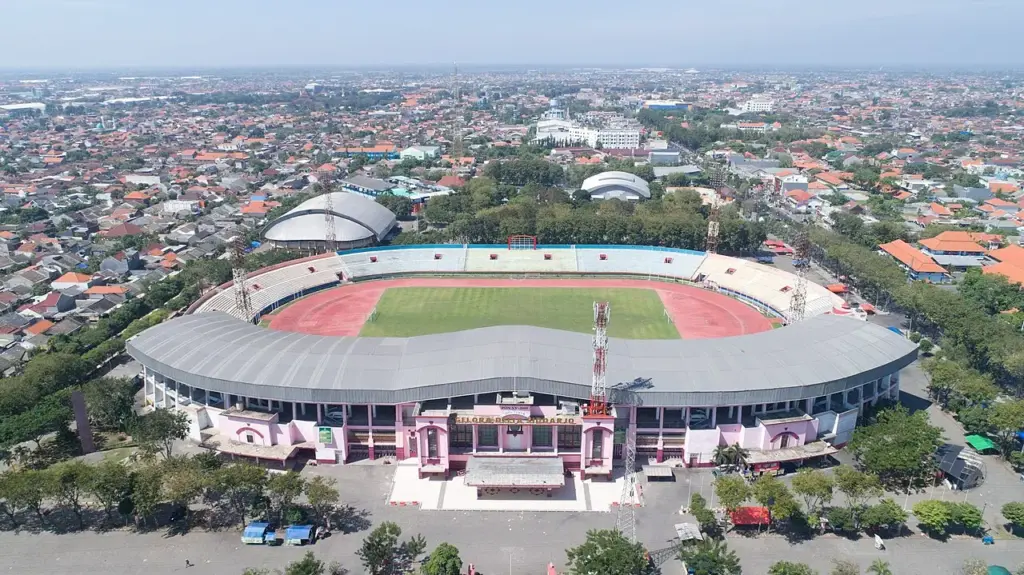
The relocation carried a heavy human and community cost. Players spent about two months away from their wives, families and children. In Persipura’s 8 November announcement, Owen noted that playing home fixtures in Sidoarjo never made the East Java venue their real home. Jayapura, he said, remained where the club belonged, and he hoped returning to Papua would bring a different atmosphere and fresh energy to the squad.
A football club’s home ground is more than just a name on a fixture list. It is the place where players’ families, local fans and the wider community share in the everyday life of the team. Playing hundreds of kilometres away meant supporters in Papua could not watch their team in person, while local businesses around the stadium missed out on normal matchday trade.
The club also had to absorb the cost of accommodation in Sidoarjo alongside lost gate receipts. Neither the club nor local traders have released verified figures for those financial impacts, so the exact scale of the losses cannot be estimated.
On-pitch struggles and an unexplained point deduction
The time away from Papua also coincided with an inconsistent run of results that fell short of the club’s expectations. Across nine matches in the first phase, Persipura recorded four wins, two draws and three defeats.
Those results add up to 14 points on the pitch, but Persipura stated on 8 November that they ended the first phase with 13 points following a one-point deduction linked to a sanction from the previous season.
How that deduction was applied remains unclear from the public record. The published account of the May decision from the PSSI Appeals Committee lists the closed-door ban, the partial stand closure and the Rp200 million fine, but it makes no mention of a one-point penalty.
Statements from league officials do not clear up the confusion either. Back in August, I.League general manager Budiman Dalimunthe pointed out that Persipura’s first-phase ban on hosting spectators was different from the situation of a club that fails to provide a suitable home ground, which is an offence that can trigger a one-point deduction.
Because Budiman’s comments do not establish the formal legal basis for Persipura’s reduced tally, the deduction should not be automatically linked to the May appeal ruling. Both PSSI and I.League still need to identify the specific written rule or decision that cost the club a point.
Also Read: Inside SC Cambuur’s urgent search for financial stability
A baffling clash over stadium stands
As Persipura prepare for the second phase, the biggest unresolved problem is a direct contradiction over which parts of Stadion Lukas Enembe can be opened to the public.
On 3 November, after nearly six months of repair work, the provincial government announced that the stadium would reopen under strict conditions. In the provincial government’s reopening announcement, Laurens Wantik, the acting head of the provincial Youth and Sports Department, stated that only the north and south stands would be made available to spectators.
He added that entry would be restricted to fans holding official tickets, sales would stop as soon as the approved allocation was reached, and match organisers would not be allowed to exceed the permitted capacity. The government also called for tighter security and proposed banning large public watch parties on screens outside the arena.
That government instruction clashes head-on with the published PSSI Appeals Committee decision, which states that the north and south stands must stay closed during the second phase.
Both sets of rules cannot be followed as written. One authority says the north and south stands are the only areas fans can enter, while the other says those exact same stands must be shut. It is possible that officials have issued a private clarification, or that the government and PSSI are referring to different sections of the stadium layout, but no public document explains the discrepancy. Persipura’s own 8 November statement makes no mention of which stands will be used.
Until the club, the provincial government, PSSI and I.League align their instructions publicly, basic matchday operations remain in doubt. The seating layout directly affects how tickets are sold, how many fans can enter the ground, how spectators move through the gates, where police and stewards are stationed, and whether the club is complying with its disciplinary punishment.
Security overhauls and the real test ahead
Persipura have made it clear that they want to prevent any repeat of the May violence. Owen revealed that the club brought in external specialists, including a security officer with FIFA certification, to inspect Stadion Lukas Enembe and review matchday operations.
Working alongside the provincial government, relevant departments, the police, the military and local community groups, the club is planning new layouts for vehicle routes, fan entry points and pedestrian movement around the stadium. One specific goal is to keep the inner Ring 1 perimeter completely clear.
Bringing in outside expertise shows that the club recognises the need for change, though it requires an important qualification. Hiring an individual who holds a FIFA security certificate is not the same thing as FIFA itself inspecting or approving the stadium. Furthermore, Persipura have not published the specialist’s findings or a final report confirming that every safety recommendation has been completed.
Several basic operational questions remain unanswered ahead of the first home kick-off. The public has not been told the final approved capacity, how vehicles and pedestrians will be kept apart, what evacuation routes will be used, or which authority holds the final sign-off before each fixture.
Also Read: Hamza Igamane extends Lille stay as knee rehab enters final stage
Beating Deltras gave Persipura a positive end to a difficult spell in East Java, and returning to Sentani will reunite players with their families while restoring the vital bond between the club and its supporters. Yet simply walking back out onto the pitch at Stadion Lukas Enembe is only the beginning.
The real measure of progress will be whether Persipura and local authorities can resolve their conflicting rules, put transparent safety plans into practice, protect a public stadium and rebuild trust after the events of May.