

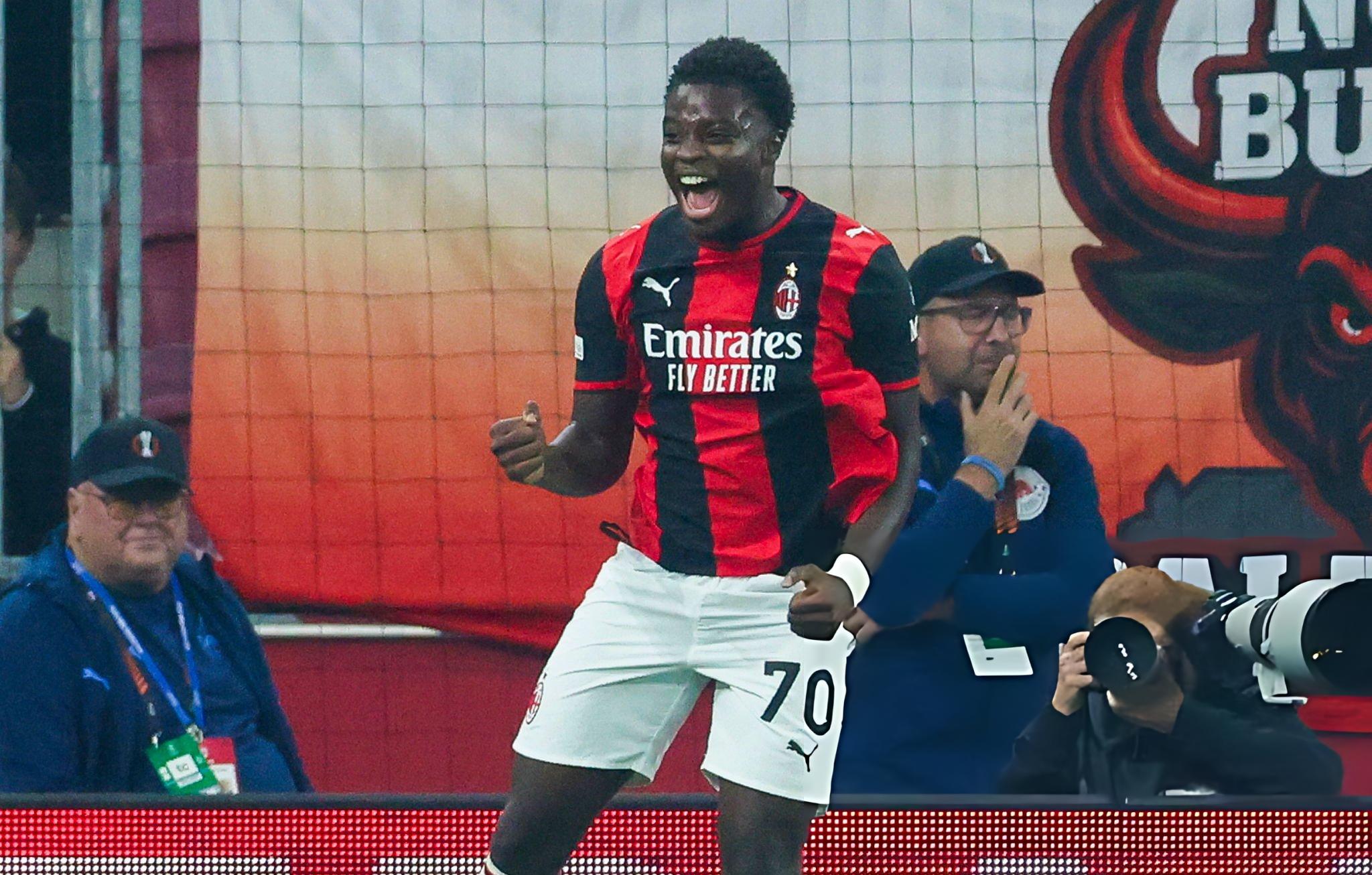
Scoring three goals in a European match changes how people talk about a young footballer overnight. When 19-year-old Alphadjo Cisse struck a first-half pair and added a third shortly after the break in AC Milan’s 4-0 win away to RB Salzburg on 15 October, he gave the club’s supporters an unforgettable evening.
A performance like that always invites extreme reactions. Some observers will want to crown him as Milan’s next frontline star right away, while more cautious voices will warn that one big night in Austria proves very little.
The sensible path lies between those two extremes. Cisse has not suddenly solved all of Milan’s attacking problems or earned an untouchable place in the starting lineup. What he has done is give manager Ruben Amorim a clear, compelling reason to trust his attacking instincts and give him a defined role in the first-team rotation over the coming months.
What the Salzburg Hat-Trick Actually Showed
Milan travelled to Austria needing a response in the 2026/27 Europa League league phase after losing 2-0 at home to Benfica in their opening match. By the 50th minute, Cisse had effectively settled the contest on his own, before Gonçalo Ramos added a fourth goal in the 72nd minute and Filippo Terracciano was sent off late in the game.
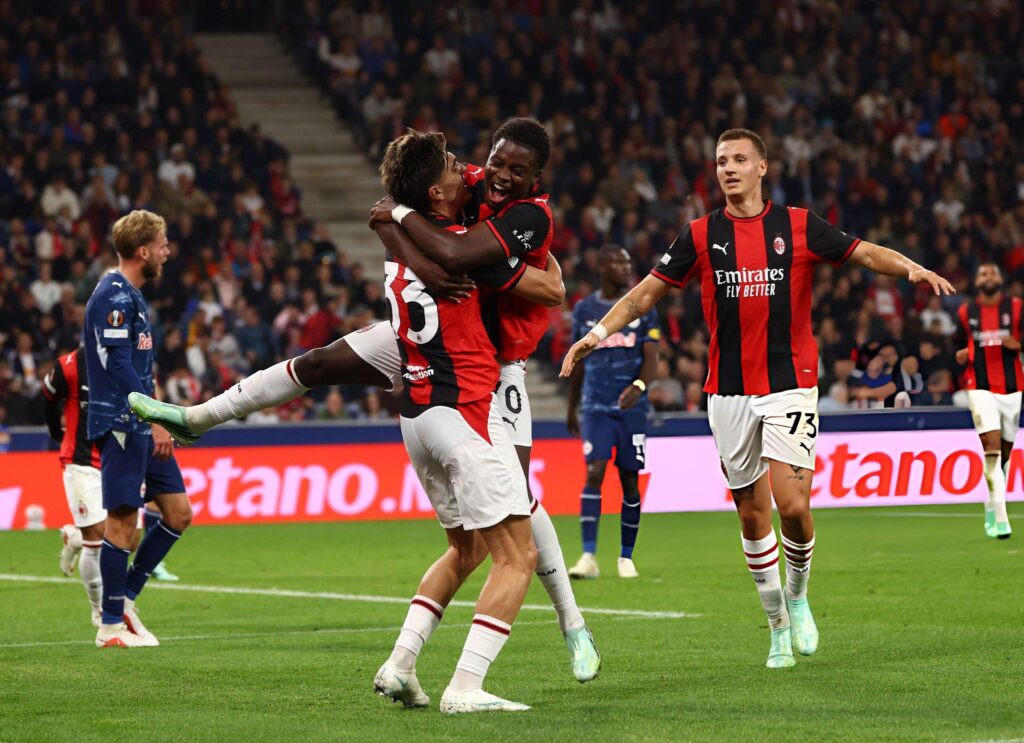
The variety of Cisse’s three finishes immediately stood out in AC Milan’s official match report. His opener in the 15th minute came from an Omari Hutchinson cross, which Cisse met with a well-timed header. In the 32nd minute, after Adrien Rabiot opened up the Salzburg defence and Davide Bartesaghi supplied the final pass, the teenager finished cleanly with his left foot. Shortly after half-time, Rabiot delivered another cross into the box, and Cisse completed his hat-trick with his right foot.
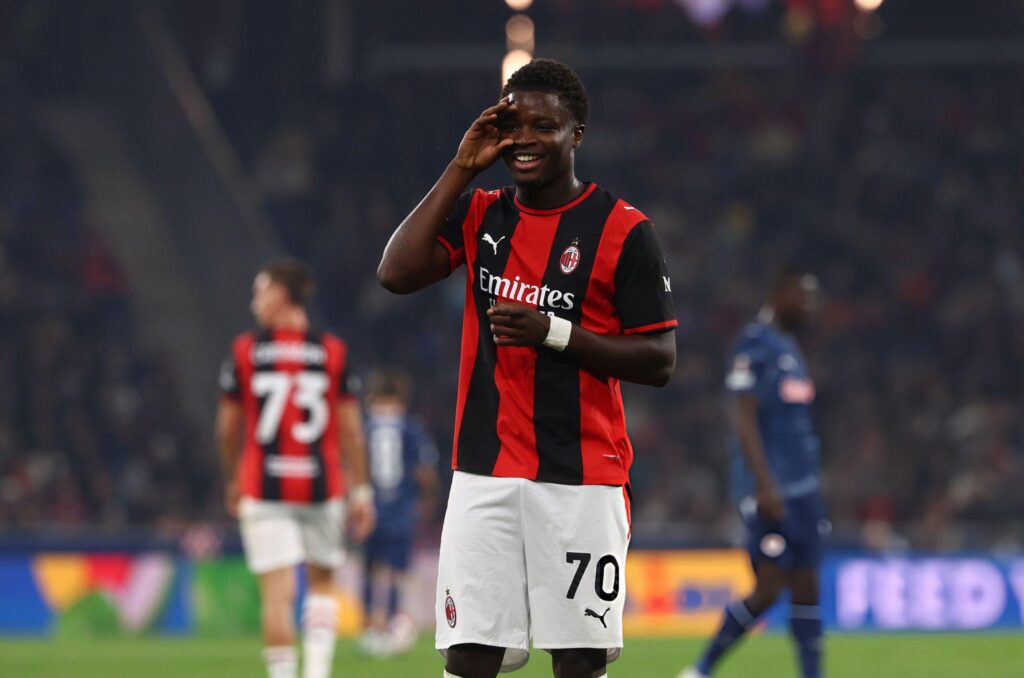
Scoring with his head, his left foot and his right foot in under an hour showed calm technique inside the penalty area. Even so, the movement before each shot mattered more than the finishes themselves.
Watch how most young midfielders play when they step up to senior European football, and you often see them stay in safe zones outside the penalty box. They ask for the ball to feet because they want to avoid mistakes. Cisse did the opposite in Salzburg.
Every time Milan worked the ball into a wide area, he adjusted his stride and attacked the spaces between Salzburg’s defenders. He read the flight of Hutchinson’s cross early, held his run just long enough to find room for Bartesaghi’s pass on the second goal, and attacked the box again at the start of the second half when a tired defence expected Milan to slow the tempo down. Finishing three chances in one game requires a bit of fortune, yet getting on the end of those chances comes from anticipation and bravery off the ball.
Why Salzburg Was Part of a Wider Progression
Treating the victory in Austria as a random fluke would ignore the steady work that brought Cisse to this point. His recent form is already backed up by earlier contributions this season and a solid grounding in senior Italian football.
Before travelling to Salzburg, Cisse had already found the net on his Serie A debut for Milan against Torino in August and scored again against Juventus in September. Those strikes took his tally for the 2026/27 campaign to five goals in seven appearances across Serie A and the Europa League. Scoring against two established Italian sides and following that up on the European stage suggests that his penalty-box instincts translate well to top-level football.
His career path before arriving at San Siro explains why he looks so comfortable making those runs. Born in Treviso on 22 October 2006 to Guinean parents, and listed as a midfielder on AC Milan’s official player profile, he joined the Hellas Verona youth academy in 2020. He worked his way through Verona’s age-group sides, made his senior debut in the Coppa Italia against Ascoli in August 2023, and played his first Serie A minutes against Inter in May 2024.
The most important step in his education came during a loan spell at Catanzaro in Serie B during 2025. Youth football rarely prepares a midfielder for the physical contact and crowded penalty areas of the professional game. Playing regular second-tier football forced Cisse to learn how to find space against experienced senior defenders.
He scored six goals in 22 appearances during the first part of that Serie B campaign before an injury interrupted his run in the team. Milan saw enough in those performances to sign him permanently in February 2026 while leaving him on loan at Catanzaro for the rest of the season.
That background puts the Salzburg match into proper perspective. Seven appearances for Milan are still far too small a sample to prove that he will score at this rate over a full 38-game league season. Opponents will now study his runs more closely, and he will face matches where defences sit deep and leave no space in the box. Even with those caveats, his goals over the past year show a repeatable skill rather than beginner’s luck.
How His Movement Helps Milan Tactically
Cisse’s habit of arriving late in the penalty area gives Milan a specific tactical weapon that can be difficult for opposing teams to handle. Modern defences are drilled to track centre-forwards and close down wingers, yet they often struggle when a midfielder sprints into the box from deeper positions.
When a striker like Gonçalo Ramos occupies the opposition’s centre-backs, those defenders have to keep their eyes on the front line. If Cisse times his forward run from midfield just as a teammate prepares to cross, an opposing midfielder has to track him all the way to the six-yard box. One moment of hesitation from that marker gives Cisse a free header or a clear shot at goal.
This kind of movement helps the team even when the ball does not go to him. When a midfielder consistently sprints beyond the striker, opposing defenders are forced to drop deeper toward their own goal line. That backward step creates room around the edge of the penalty area for teammates like Rabiot or Hutchinson to shoot or play passes through the middle.
At the same time, Milan must be careful not to misunderstand what makes him effective. Scoring five goals in seven games does not mean Amorim should convert Cisse into a permanent centre-forward. Playing with his back to goal against two physical centre-backs is completely different from arriving unmarked from midfield with a full head of steam.
He also should not be expected to start every match right now. Attacking runs are only one part of a midfielder’s job at a club chasing domestic and European targets. There will be tight Serie A fixtures where Milan need midfielders who can slow the game down, keep possession under heavy pressing and protect the back line for 90 minutes. Using Cisse in games where his forward runs can stretch the opposition, while teaching him the positional discipline needed in slower matches, is the smartest way to build his all-round game.
Balancing Opportunity and Patience Under Ruben Amorim
The way Ruben Amorim spoke after the final whistle in Austria showed a healthy understanding of what a 19-year-old needs. According to Reuters’ report on the Salzburg match, the Milan manager made it clear that Cisse had earned his playing time on merit. Amorim praised the teenager’s explosiveness, work ethic and potential, while also pointing out that he still has plenty of areas to improve.
That measured tone is exactly what the situation requires. Big clubs often mishandle young players who break through ahead of schedule by falling into one of two traps.
The first mistake is burdening a teenager with the responsibility of carrying the attack every week, then dropping him as soon as his form dips. The second mistake is treating a great performance as a nice bonus and returning the player to the end of the bench as soon as senior teammates are available. As we explored in our analysis of Endrick and Real Madrid, young attackers only turn raw promise into consistent output when a coach trusts them with real minutes during meaningful matches rather than saving them for comfortable wins.
Cisse is going to have quiet games over the next few months. He will misread passes, lose possession in midfield and go through spells where the ball does not bounce his way inside the penalty area. Those rough patches are a normal part of learning top-flight football at 19.
Amorim can protect the youngster by keeping his instructions simple and his minutes steady. Giving Cisse regular starts in cup games and selected league fixtures, alongside substantive 25-minute or 30-minute appearances off the bench when games are stretched, will allow him to test himself without feeling that every quiet outing puts his place in the squad at risk.
Why Contract Talks Are Secondary to Pitch Time
Success in Europe quickly brings transfer speculation and contract headlines. On 16 October, La Gazzetta dello Sport reported that Milan had taken initial steps toward extending Cisse’s deal, noting that a meeting with his representatives could take place the following week with hopes of reaching an agreement before the end of 2026.
It is important to separate those media reports from confirmed club business. Cisse’s existing contract was already reported to run until 2030, and no renewal had been agreed or announced as of 17 October.
From a business perspective, opening early talks makes sense for Milan. The club signed him in February before he had kicked a ball for their first team, and his goals against Torino, Juventus and Salzburg have raised his profile across Europe. Updating the terms of a young player who is contributing to the senior squad is standard practice for a top-flight sporting director.
Across the football pyramid, clubs use contracts in very different ways to manage risk, whether that involves locking down a teenager until the end of the decade or arranging the kind of brief deal covered in our report on Ali Koiki’s short-term move to Eastleigh. At Milan’s level, however, a new contract only protects the club’s balance sheet. It does nothing to improve a player’s first touch, defensive positioning or decision-making under pressure.
Whether Cisse signs an updated deal before the end of the year or remains on his current contract, his real progress will be decided on the training ground at Milanello and on the pitch on matchdays. Financial rewards should follow football development, not replace the hard work of coaching him through his first full season at the top level.
What Milan Should Do Next
The immediate test of how Milan handle Cisse’s momentum comes on Sunday, 18 October, when they face Atalanta in Serie A. Matches against Atalanta demand intense running, quick decisions under heavy pressure and strict defensive tracking across the midfield.
Amorim does not need to force Cisse into the starting eleven on Sunday just to reward him for Thursday night. What matters is that the teenager remains an active part of the matchday plan against Atalanta and through the rest of the autumn schedule.
Over the next two months, Milan should judge Cisse by much more than his goal tally. His scoring rate will naturally cool down from five goals in seven games. The real proof of his growth will be whether he continues to make unselfish runs into the box when passes do not arrive, whether he holds his position in midfield when the opposition has the ball, and whether he can link play cleanly against Serie A defences that crowd the middle of the pitch.
Cisse has already shown that he can finish with his head and both feet against high-level opponents. By delivering against Torino, Juventus and RB Salzburg before his twentieth birthday, he has done his part to knock on the first-team door. Milan must now match that ambition with steady minutes, patient coaching and the trust required to turn a lively young finisher into a complete midfielder.

Leave a Reply