
Members at SC Braga and FC Porto made important governance decisions during separate general assemblies on Saturday, 21 November. At SC Braga, members approved almost all proposed updates to the club’s statutes, the official rulebook that governs the association, yet they blocked two proposals covering sports company ownership and changes to the club badge.
At FC Porto, members passed the club’s 2025/26 accounts by a wide margin, while a disciplinary appeal from former Super Dragões leader Fernando Madureira remained off the agenda.
Together, both meetings showed how Portugal’s Clube/SAD model divides power in football. The club association and its professional sports company, known as a Sociedade Anónima Desportiva or SAD, are separate legal bodies. Club members govern the association and vote on its rules and accounts, while company shareholders exercise their voting rights inside the SAD.
SC Braga members keep majority SAD rule despite 36.99% stake
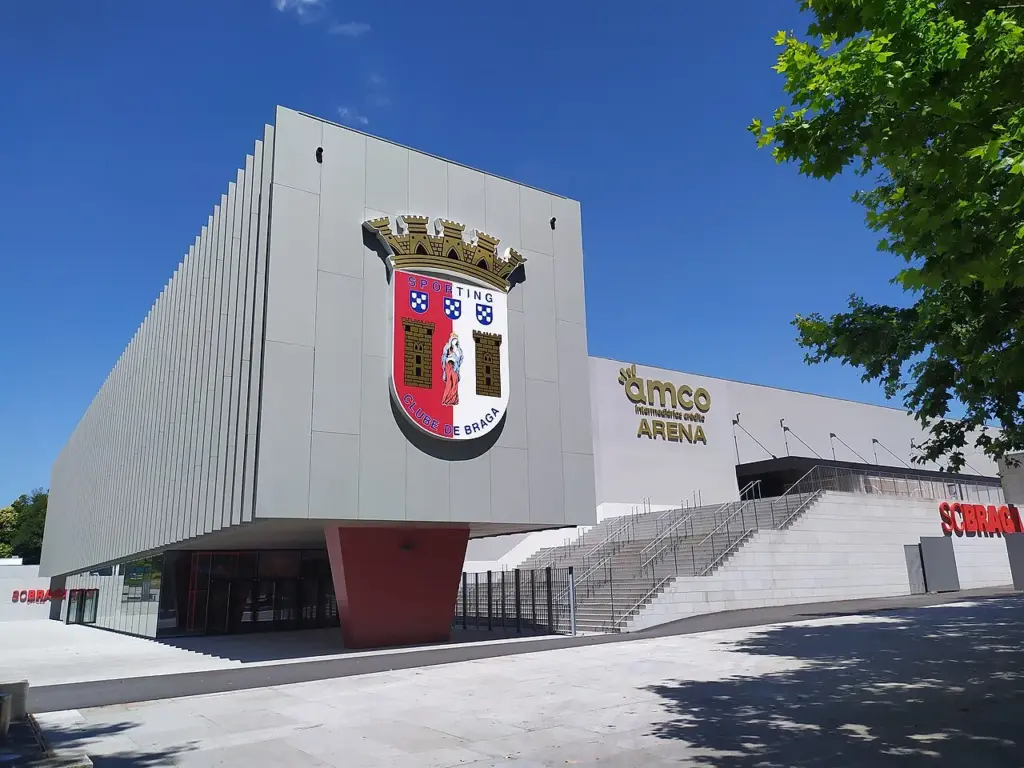
A total of 427 members attended SC Braga’s Extraordinary General Assembly at the AMCO Arena on 21 November. They approved 68 statutory updates in all, covering revisions to 62 articles, the addition of one new article and the removal of five others. The club said those votes amounted to 97% approval of the proposed changes. Members also backed appointing a club representative to formally register the updated statutes.
Only two proposed changes failed, covering Article 110 and Article 6. Because members rejected both, the existing wording of those two articles remains in force.
Article 110 governs SC Braga’s stake in any SAD. Under the current wording, the club must hold, directly or indirectly, a majority of the share capital and corresponding voting rights in every sports company it participates in, whether existing or created in the future.
The rejected proposal would have relaxed that rule. Instead of keeping a standing obligation to own a majority in every SAD, the club would only have been required to preserve a majority stake if it obtained one. In practice, that change would have given the association more flexibility to stay a minority shareholder while working with outside investors, weakening the statutory guardrail around future ownership and member oversight.
That debate carried extra weight because SC Braga does not currently hold a majority of its football company. The club’s 2025/26 accounts put its holding in Braga SAD at 36.99%. It is the largest single shareholder, yet its stake sits below 50%.
| Measure | Position on Braga SAD ownership |
| Existing Article 110 rule | The club must maintain, directly or indirectly, a majority of share capital and voting rights in every SAD it participates in, present or future |
| Rejected 21 November proposal | The club would only have to keep a majority stake if it obtained one, giving more room to stay a minority shareholder with outside investors |
| Actual 2025/26 shareholding | 36.99%, the largest individual stake in Braga SAD, but below the 50% majority threshold |
By voting down the revision, members kept the majority-control commitment inside the rulebook. That outcome does not give SC Braga majority ownership or voting control of Braga SAD today. It leaves the statutory requirement untouched and leaves open how the association plans to close the gap between its rules and its actual shareholding.
Also Read: Why the rejected Vitoria SC audit leaves unanswered questions
Badge voting threshold stays in place ahead of digital updates
The second defeated proposal targeted Article 6, which sets out the official description of SC Braga’s emblem. Changing the club’s statutes normally requires a three-quarters majority. The rejected amendment would have created an exception for Article 6, allowing members to alter its wording with a simple majority at an Extraordinary General Assembly called solely for that item, with no other business on the agenda.
Members did not vote on whether to adopt a completely new badge. They voted on whether to lower the bar for changing the statutory rules that protect the emblem. By turning down the proposal, members kept the existing three-quarters requirement intact.
Even so, club president António Salvador said technical and graphic adjustments to the badge would start appearing on SC Braga’s digital platforms from Monday, 23 November. The planned updates involve the depiction of Santa Maria of Braga, the towers and the mural crown, along with lettering and spacing refinements.
Salvador described the changes as technical corrections meant to bring the emblem more closely match the wording already written in the statutes, rather than a new redesign or a fundamental change to the club’s identity.
That distinction will now face scrutiny. The defeated amendment would have provided a simpler route to rewrite Article 6. The digital rollout is instead being presented as routine graphic alignment that does not require a change to the statutes. No legal ruling has found that the announced adjustments breach Saturday’s vote, yet the launch will test whether members accept the board’s line between correcting the existing crest and altering club identity.
FC Porto members pass 2025/26 accounts after October SAD vote
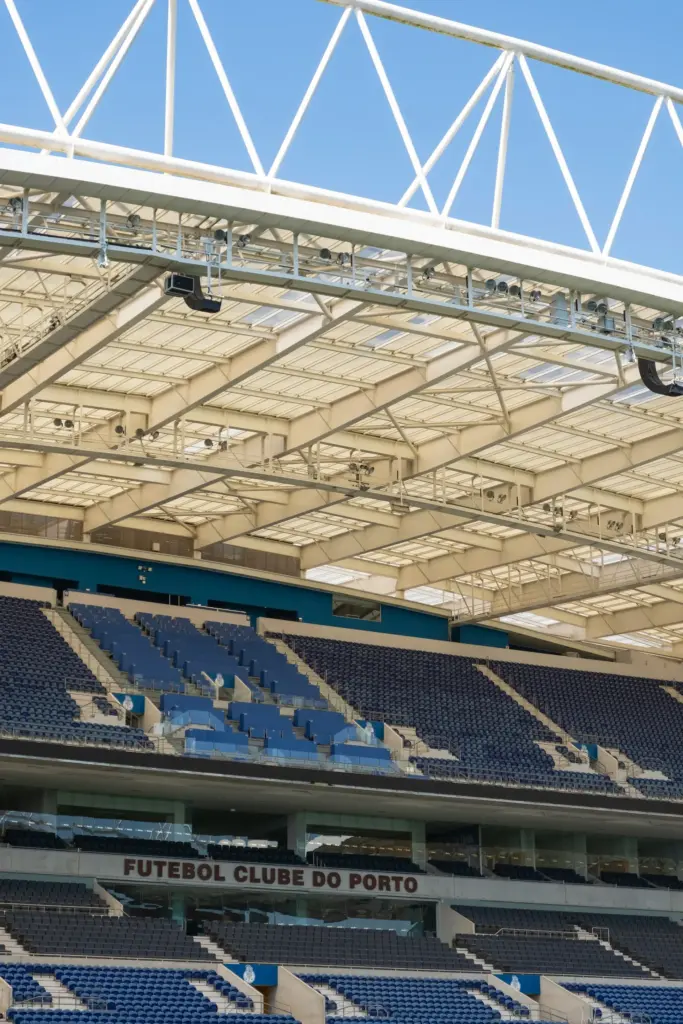
FC Porto held its Ordinary General Assembly on the same day, 21 November, at the Dragão Arena. The club reported that 415 members attended, with 354 taking part in the vote on the 2025/26 Annual Integrated Report, which contains the association’s individual and consolidated accounts. About 87% of all ballots cast backed the report.
| Voting item | Figure |
| Members attending | 415 |
| Ballots cast | 354 |
| Votes in favour | 308 |
| Votes against | 32 |
| Abstentions | 13 |
| Invalid votes | 1 |
| Share of ballots in favour | About 87% |
That club vote followed a separate FC Porto SAD shareholders’ meeting on 30 October. At the October meeting, shareholders approved the SAD’s 2025/26 Annual Integrated Report and accounts, along with the proposed allocation of results and other corporate and governance measures. The two votes cover different legal entities. The October meeting concerned the professional sports company and its shareholders, whereas the November assembly concerned the membership association and its members.
Why Fernando Madureira’s disciplinary appeal stayed off the agenda
Away from the accounts vote, attention centred on why FC Porto members did not decide Fernando Madureira’s disciplinary appeal. The former leader of the Super Dragões supporter group was expelled as a club member following internal disciplinary proceedings linked to events around the club’s November 2023 general assembly.
He appealed that club decision, yet the appeal has stayed unresolved because restrictions tied to separate criminal proceedings have kept him from attending the relevant members’ meetings.
In the formal notice for the 21 November assembly, FC Porto stated that the circumstances preventing Madureira from attending an earlier meeting in January 2025 had not changed. The club relied on Article 180 of the Portuguese Civil Code, which states that a member of an association cannot appoint another person to exercise personal membership rights. FC Porto said its own statutes contained no exception allowing someone else to represent Madureira for that purpose. On that basis, the club treated his personal attendance as a requirement before the assembly could consider his appeal.
That procedural rule has clear limits. Article 180 does not judge the merits of a disciplinary appeal, and it does not state that an imprisoned member automatically loses the right to challenge an expulsion. FC Porto used the ban on delegating personal rights to explain why the appeal could not be placed on the agenda without Madureira present.
Members did not vote to uphold or overturn his expulsion on 21 November. The appeal was kept off the agenda and was not rejected on its merits.
Also Read: FIFA places Kerry FC under registration ban over player documents
What both assemblies show about member democracy in Portugal
The votes in Braga and Porto underline how Portugal’s Clube/SAD structure separates association democracy from corporate control. Club members do not automatically vote as individual shareholders inside the SAD. Their real leverage over professional football depends on how many shares the founding association owns and what legal rights come with that holding.
The two clubs sit in very different positions within that system. At SC Braga, the gap between the association’s 36.99% SAD stake and the majority-ownership rule in Article 110 made Saturday’s ballot a clear statement about member oversight. Supporters refused to loosen either the ownership commitment or the voting threshold protecting the club emblem.
At FC Porto, holding separate meetings for SAD shareholders in October and club members in November showed both layers of governance operating in parallel, while the unresolved Madureira appeal showed how civil law and internal procedural rules can determine whether a member can exercise personal rights at all.
Member democracy still holds genuine weight in Portuguese football, because supporters inside the association remain the final authority on club statutes and association accounts. At the same time, its reach is bounded by corporate shareholdings inside the SAD, the legal rights attached to the founding club’s stake and the procedural rules that govern who can be heard on the assembly floor.