

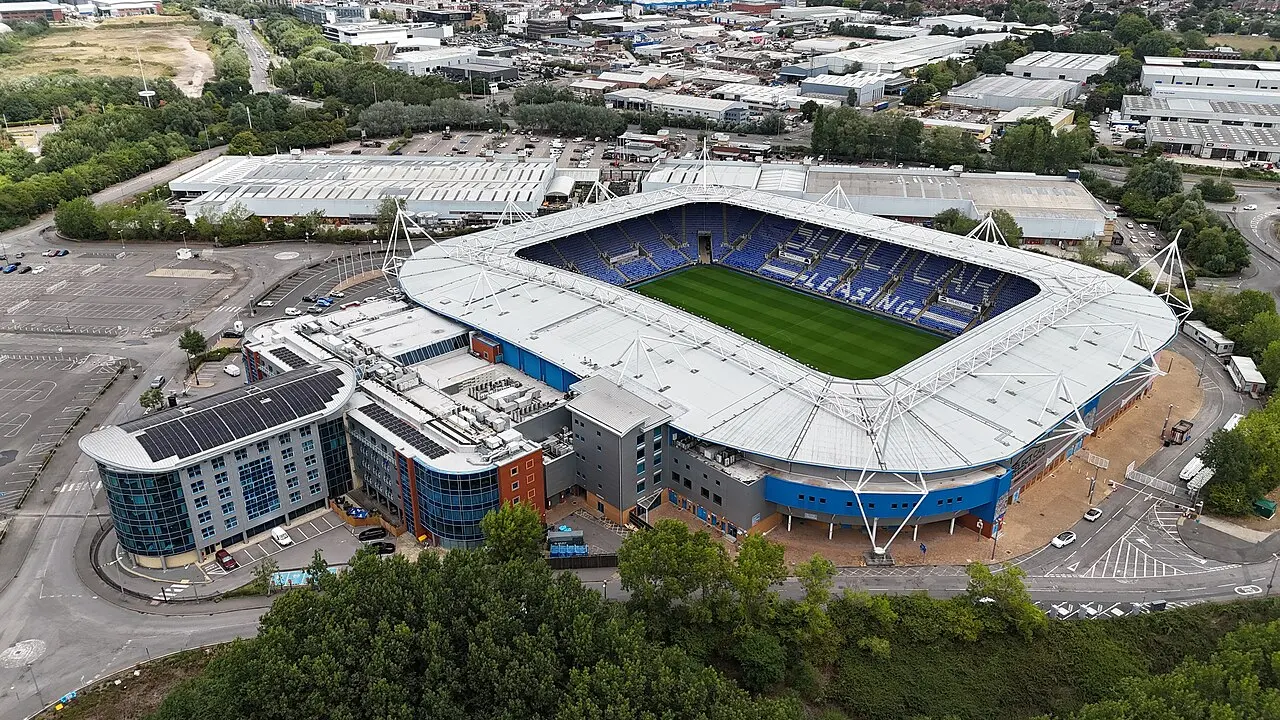
Less than six months after voting to tighten their financial framework, League One clubs are debating another round of spending controls. According to a report by The Guardian on 11 November, Reading and Peterborough United are leading a push for stricter spending restrictions across the third tier. Other clubs, including MK Dons and Wycombe Wanderers, are reported to oppose the move.
The discussions reflect growing unease about how quickly playing budgets are escalating in League One. Any rule change would require the backing of a two-thirds majority of clubs, and it is not yet clear whether enough support exists to pass further reforms.
The EFL confirmed to The Guardian that talks are taking place, though no formal proposals have been put to clubs. League Two clubs have also been part of wider discussions, although it remains uncertain whether they would adopt the same measures.
Rising wage bills and widening financial pressure
Concerns over League One wage inflation in 2026-27 have helped drive the latest debate. One unnamed club owner told The Guardian that divisional wage bills had climbed by 15% during the 2026-27 campaign. That owner also claimed that a budget big enough to rank among League One’s top six five years ago would now sit in the bottom three. Because that 15% figure comes from a single club source rather than official league data, it should be viewed as an individual estimate rather than a verified EFL statistic.

Even so, independent research shows that financial strain in the division has been building for several seasons. The Independent Football Regulator’s State of the Game report, published in 2026, found that League One player wage costs rose by 71% between 2021-22 and 2025-26. Over the same four-year span, player wages increased by 63% in League Two, 33% in the Premier League and 32% in the Championship.
Club losses have grown alongside those wage bills. The regulator found that average losses in League One more than tripled from £2.4 million per club in 2021-22 to £7.5 million in 2025-26, a deficit equal to more than 65% of divisional revenue. To stay afloat, clubs have relied heavily on outside cash. On average, a League One club required 72 pence in external financing from owners, loans or other sources for every £1 it generated in regular revenue.
The regulator’s data also highlights an important limit to what squad-cost rules can achieve. Across the EFL and National League, 17 clubs had non-player operating costs higher than their total revenue in 2025-26, meaning they would have recorded losses even if they had spent nothing on player wages. Capping first-team spending can curb a club’s largest variable expense, yet it cannot fix financial problems caused by low commercial income, debt servicing or stadium and administrative costs.
Also Read: EFL’s new financial rules face their first test while the PFA legal challenge remains unresolved
How the proposed luxury tax and spending caps would work
The Guardian outlined two main ideas currently under discussion, alongside potential limits on three-year losses. None of these concepts has been formally drafted or approved, and the final design of any regulation could differ substantially from the options reported so far.
The first option is an EFL League One luxury tax modelled on squad-cost controls. Under this proposal, a club that spends more than 50% of its revenue on squad costs would pay a £1 levy for every additional £1 spent. Money raised from the levy would be redistributed to other clubs in the division, while sporting sanctions would apply if a club’s spending reached 60%.
The second option is a fixed cap on how much money owners can inject into their clubs. Alongside those ideas, clubs have discussed introducing three-year loss limits, though no figures have been published and it remains unclear whether a loss cap would operate alongside a luxury tax or stand as a separate proposal.
Each mechanism carries clear trade-offs. A luxury tax aims to penalise heavy spenders while sharing money with clubs that stay within budget. In practice, however, wealthy owners might simply treat the levy as an extra operating expense rather than a reason to cut spending. Conversely, if the penalty is too severe, clubs could struggle to retain key players or prepare for promotion.
A fixed cap on owner investment raises different practical questions. While it could stop outside wealth from inflating transfer fees and wages, poorly drafted rules could discourage legitimate long-term spending on academies, training facilities and stadium upgrades. The EFL would also need clear definitions of what counts as owner funding and strict reporting standards to prevent clubs from working around the cap.
Existing EFL rules and the limits of club accounts
The push for extra controls comes shortly after clubs updated the EFL financial regulations for 2026-27. On 15 May 2026, the league announced that League One clubs had voted to tighten their Salary Cost Management Protocol, known as SCMP.
The standard squad-spending ceiling was reduced from 60% to 50% of relevant turnover, with first-team manager wages brought inside the calculation alongside player salaries and agents’ fees. Clubs relegated from the Championship are permitted to spend up to 65% in their first season back in League One.
The revised EFL SCMP rules also restrict how much owner funding can boost a club’s playing budget. For most League One sides, only 50% of a qualifying non-repayable equity injection counts toward allowable squad costs. An owner who injects £500,000, for example, can add at most £250,000 to the club’s squad-cost allowance, alongside net cash generated from player trading.
League Two clubs rejected a proposal to adopt the same rule, keeping a staggered system that allows a higher proportion of initial qualifying owner contributions to count toward squad budgets.
For supporters looking at Reading, Peterborough, MK Dons and Wycombe, publicly available Companies House accounts cannot show whether any of those clubs is complying with SCMP rules. Standard annual accounts often combine playing and non-playing staff wages into a single figure. By contrast, the EFL applies specific definitions of relevant turnover, qualifying equity and football expenditure based on detailed financial returns submitted privately by clubs. Independent estimates constructed from company accounts therefore cannot be treated as official compliance findings.
The growing regulatory gap with the Championship
The debate in League One has also drawn attention to the widening regulatory divide with the Championship. From 2026-27, second-tier clubs replaced Profitability and Sustainability rules with Squad Cost Rules. Under that framework, Championship clubs can spend up to 85% of allowable income, made up of 85% of relevant turnover, 85% of net player trading and qualifying owner equity injections.
| Competition | 2026-27 financial framework | Standard squad spending limit | Treatment of qualifying owner equity |
| League One | Salary Cost Management Protocol | 50% of relevant turnover, or 65% for clubs newly relegated from the Championship | 50% of qualifying non-repayable equity counts toward squad budget |
| League Two | Salary Cost Management Protocol | Turnover-linked squad cost limit | Staggered system allowing a higher share of initial qualifying injections to count |
| Championship | Squad Cost Rules | 85% of allowable income, including relevant turnover and net player trading | Counts in full up to £33 million or £34 million over three years, depending on EFL guidance |
The EFL’s published documents contain an unresolved discrepancy over the Championship equity allowance. Its announcement on 15 May stated that owners could inject up to £33 million over three years, with a single-season limit of £15 million. Its current financial-regulation webpage, however, lists a limit of £34 million over three years and £16 million in a single season. That inconsistency still requires clarification from the league, and in either case the allowance is subject to regulatory conditions rather than automatic cash available to every club.
Even allowing for differences in how each division defines income and squad costs, the contrast between the two tiers is sharp. A League One club must build its squad under a 50% turnover cap where owner equity counts for half its value, whereas a promoted Championship club moves into an 85% framework where qualifying equity counts in full up to the divisional limit.
Adding tighter controls in League One could make promotion harder to navigate if newly promoted clubs have to overhaul their squads while stepping into a much higher spending environment.
Also Read: AFC Wimbledon lose £87m investment backing after late withdrawal
The PFA High Court challenge and what happens next
Any attempt to introduce new spending restrictions must also contend with an unresolved legal dispute. In August 2026, the Professional Footballers’ Association launched a High Court challenge against the EFL over the revised SCMP rules. The union argues that the changes required full agreement through the Professional Football Negotiating and Consultative Committee, known as the PFNCC, which brings together the league, the players’ union and other football bodies.
In a statement on 11 August, the EFL rejected that claim. The league maintained that the amendments had been discussed through the PFNCC and modified an existing financial-control framework rather than making a major change to players’ terms and conditions of employment.
The PFA’s High Court challenge against the EFL carries echoes of 2021, when the league withdrew fixed salary caps in League One and League Two after an independent arbitration panel ruled that fixed caps required agreement through the negotiating process. That 2021 ruling provides important context, though it does not automatically decide the current case because the 2026 rules adjust a turnover-linked system rather than imposing hard wage ceilings.
The PFA has not commented publicly on the proposed luxury tax or owner-investment cap, so it should not be assumed that the union would automatically challenge those measures, even if proposals that curtail player spending raise fresh questions over PFNCC consultation.
Before any new rule can take effect in League One, several hurdles remain. The EFL has yet to turn broad ideas into detailed proposals setting out exact thresholds, definitions and redistribution formulas. It must also gauge whether two-thirds of clubs would back reform in the face of opposition from clubs such as MK Dons and Wycombe, while resolving uncertainty over League Two’s stance and awaiting the outcome of the High Court proceedings.
League One clubs have clear reasons to look for ways to curb unsustainable losses and reduce reliance on owner bailouts. Yet financial regulation works best when it targets reckless debt without blocking responsible investment in club infrastructure. Without broader progress on revenue distribution and non-playing operating costs, a luxury tax or loss cap alone is unlikely to resolve competitive inequality across the division.