

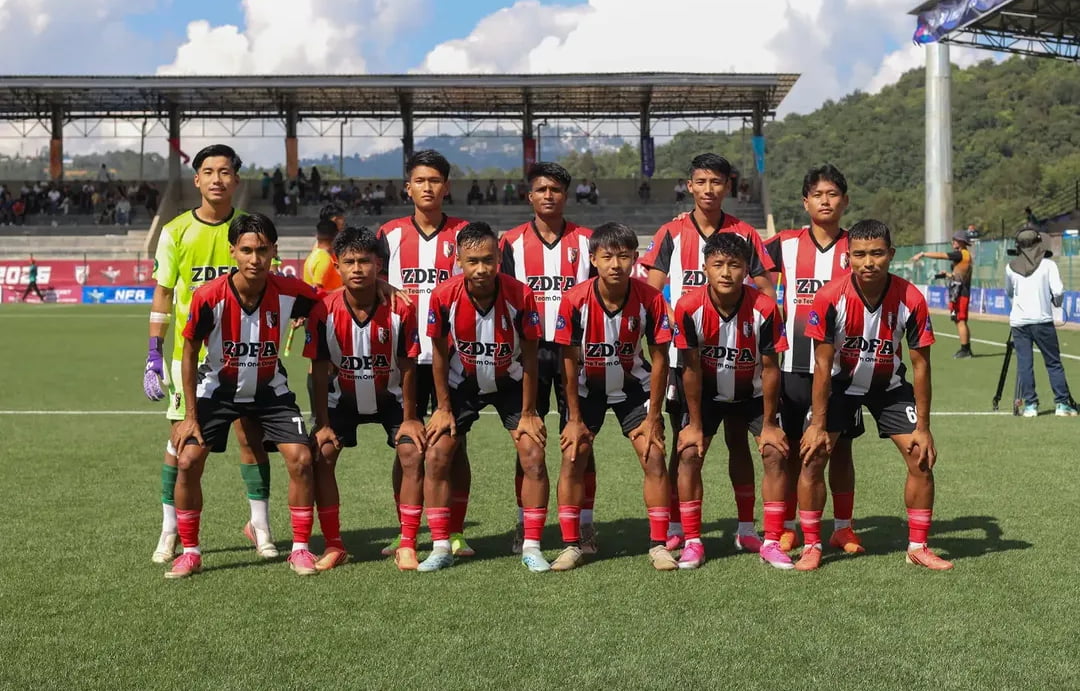
Football is supposed to bring people together, letting us set aside our differences and stand behind the team we love. That spirit is lost when supporters feel their team has been treated unfairly, and when questions about tournament decisions turn into online attacks against an entire community.
As a Sumi from Zunheboto, watching the controversy surrounding the Zunheboto District Football Association (ZDFA) at the 25th Dr. T. Ao Trophy 2026 has been deeply disappointing. My concern is not with the Mon District Football Association, its players, or its supporters. Mon came to compete, and its players had every right to celebrate their goals and their victory.
The real issues are the unanswered questions around Zunheboto’s participation, the timing of a player registration dispute, and the hostility directed at Sumis and people from Zunheboto in online discussions.
Three matches and a sudden registration dispute
Zunheboto began its campaign on October 14 with a 7-0 win over Noklak, followed by a 1-0 victory over Dimapur on October 16. On October 19, Zunheboto lost 4-0 to Mon.
The controversy goes beyond the scoreline and centers on player documentation and the Central Registration System (CRS). On September 22, The Morung Express reported on the Nagaland Football Association’s (NFA) modified Dr. T. Ao Trophy guidelines, which instructed teams to complete player documentation, CRS registration, and final squad requirements by October 7.
That timeline raises straightforward questions about tournament administration. How were registration records verified before the tournament began? Why was Zunheboto allowed to play against Noklak and Dimapur before the registration dispute became prominent? When did the issue or any formal complaint first come to the NFA’s attention, and why did it surface just as Zunheboto prepared to face Mon?
During the match on October 19, Mon scored in the first and second minutes, added another goal just before half-time, and scored again in the 60th minute. Some viewers described the opening two goals as free goals that Zunheboto appeared to allow, which quickly sparked speculation.
However, the match report and scoreline do not confirm the intention behind those early goals. If Zunheboto’s actions were tied to a protest or an off-field dispute, that context needs to be explained officially rather than left to guesswork.
Whatever happened off the pitch, immense respect is due to the 11 Zunheboto players who took the field without substitutes on the bench and without a coach to guide them because of the issue. They represented their district under difficult conditions, and questions about registration belong with the officials responsible, not the players who fulfilled their fixture.
Keep tribal hostility out of football
The most painful part of this controversy has been the reaction in livestream chats and online discussions, where criticism of a football team has crossed into hostility towards Sumis and Zunheboto.
There is a clear difference between questioning decisions made by ZDFA officials and attacking an entire tribe. A Sumi person who never attended the tournament, a young fan cheering for Zunheboto, or a player who had no role in paperwork disputes should never be made a target.
This responsibility goes both ways. Some people within the Sumi community have also responded with hurtful and insulting remarks. We cannot ask others for respect while refusing to show it ourselves, though owning our mistakes does not mean we should accept hostility towards our community as normal or deserved.
Why the NFA must issue an official notice
The silver jubilee edition of the Dr. T. Ao Trophy should be remembered for the players on the pitch, not for doubts over how the rules were applied. To stop rumours and resentment from growing, the NFA should issue an official notice explaining the Zunheboto controversy.
That notice should state which registration rules applied, when the problem was discovered, whether a formal complaint was received, why Zunheboto was cleared to play Noklak and Dimapur, and what decisions were made regarding ZDFA’s eligibility. Whether the situation came from a misunderstanding, an administrative error by officials, or a rule breach by the team, communicating the findings plainly will protect the tournament’s credibility.
Asking for transparency is not a demand for special treatment for Zunheboto, nor does it take anything away from Mon’s win. Supporters and players from Zunheboto, Mon, Noklak, Dimapur, and every other district should be judged by their performance and conduct rather than their identity.
People also need to stop playing the victim card while ignoring or dismissing the hostility directed at Sumis during this dispute. No single group owns suffering, and the world does not revolve around one community. We should be able to recognise unfair treatment honestly, treat one another with basic respect, and work towards better things together.

Leave a Reply