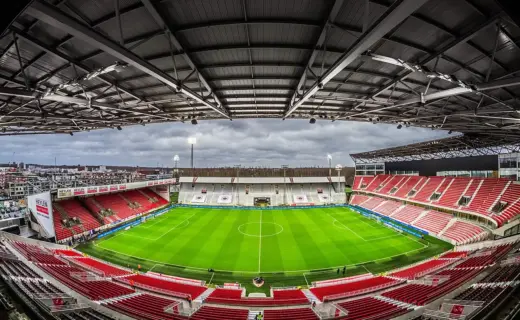

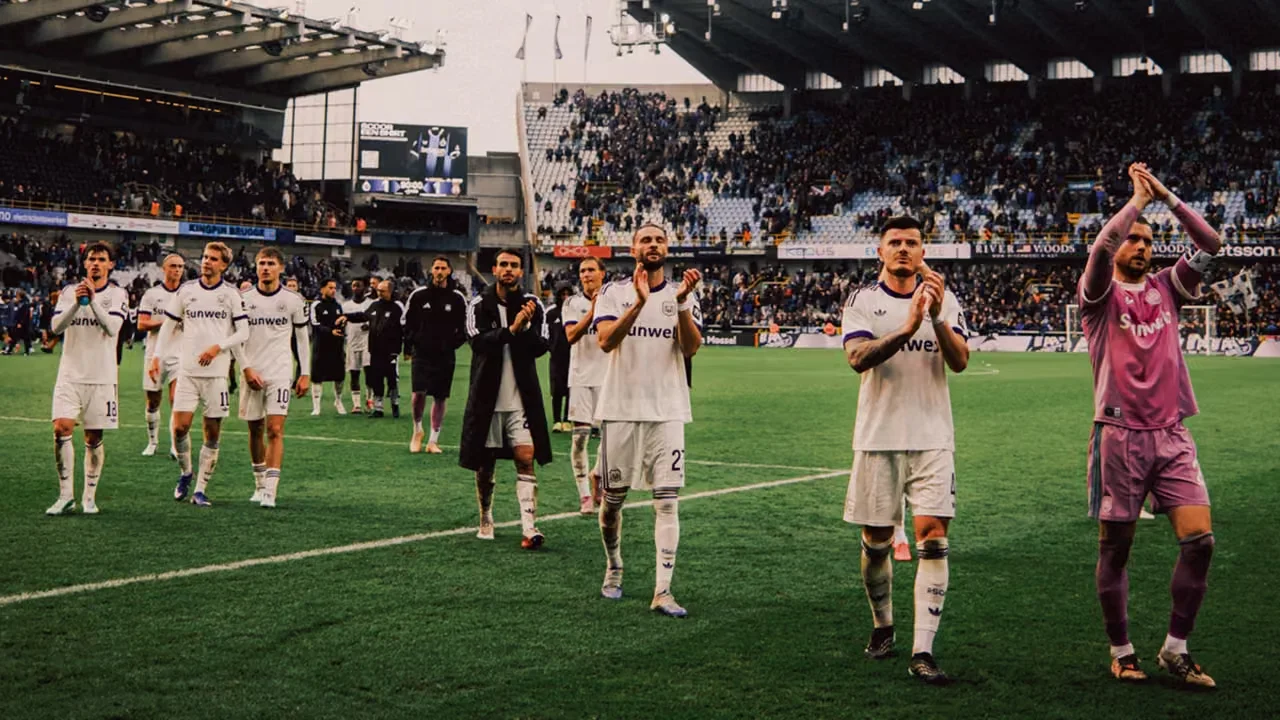
Anderlecht could lose the point it earned in a 1-1 draw away to Club Brugge after the Brussels club admitted breaking Belgium’s home-grown player rule. Club Brugge has now asked the disciplinary body of the Royal Belgian Football Association, the RBFA, to review the mistake from the match at Jan Breydel Stadium on 8 November.
The draw appeared to give both teams a point on the day. That result is now in doubt because Anderlecht listed only five Belgian-trained players on the official match sheet. RBFA regulations require professional clubs to include at least six.
How late squad changes led to the match-sheet mistake
Anderlecht has accepted fault for what it called an administrative error. The club explained that late changes to its final squad shortly before kick-off left the official match sheet short of the six required home-grown players.
Despite that admission, Anderlecht noted that its wider travelling squad on the day included enough qualifying players. The club also argued that the mistake went unnoticed before, during and after the match, and that it had no effect on the game because the team did not use all of its substitutes.
Under RBFA rules, however, only the names on the official match sheet count. Having eligible players in the wider matchday group does not satisfy the rule if those players are left off the final submitted list.
Belgian media investigations reported that late changes to the substitutes bench caused the shortfall. According to those reports, the digital match-sheet system showed a live count of qualifying players on screen, but it did not trigger an automatic warning when Anderlecht dropped below the six-player floor. While that technical detail helps explain how staff missed the error, the club remains responsible for checking its final team sheet before submission.
Belgian reports named Colin Coosemans, Ali Maamar, Mario Stroeykens, Jayden Onia Seke and Marco Kana as the five players on Anderlecht’s match sheet who met the general Belgian-trained requirement. Available reporting does not confirm how many of those five players also met a stricter age requirement for players under 21.
How the Belgian home-grown player rule works
The home-grown rule is set out in the RBFA federal regulations under Article B6.108. It is based on where a player was trained rather than the player’s nationality. A footballer from any country can qualify if they spent enough time at a Belgian club early in their career.
To count as Belgian-trained under the general rule, a player must have been registered with a club in Belgium for at least three full seasons, or 36 months, before turning 23. Those 36 months can happen in one continuous spell or across separate periods.
The regulation also includes a second, stricter age threshold. Professional clubs must name at least six players on the match sheet who meet the under-23 training requirement, and at least two of those six must have completed their three seasons or 36 months at a Belgian club before their 21st birthday.
Club Brugge files a formal complaint with the RBFA
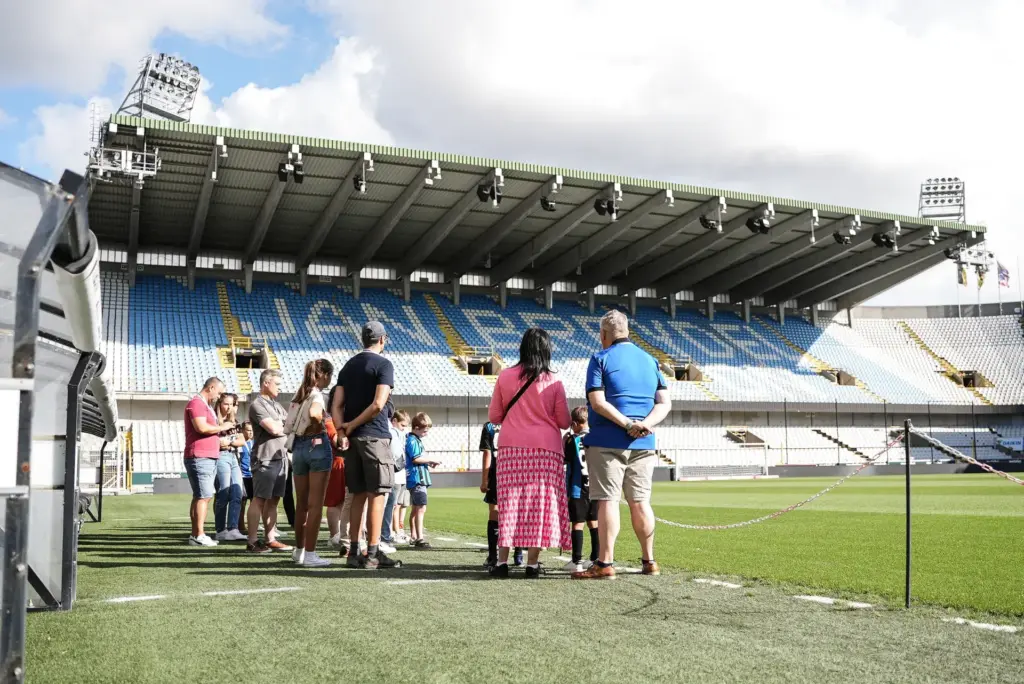
Club Brugge first stated that it would ask the RBFA to look into the breach after learning that Anderlecht had fallen short of the six-player minimum. On 10 November, local media confirmed that the Bruges side had taken the next step by lodging a formal complaint with the Disciplinary Council for Professional Football, as detailed in Belgian media reporting on Club Brugge’s complaint.
Club Brugge’s stated position is that league rules must be applied consistently to every team. According to Belgian coverage, the club is not framing its complaint mainly as an effort to pick up extra points in the title race. Club Brugge cannot demand a specific punishment on its own, as any change to the match result depends entirely on the disciplinary council’s ruling.
The RBFA has confirmed the shortfall on Anderlecht’s match sheet and pointed to Article B6.108 of its rulebook. The federation stated that the Disciplinary Council for Professional Football will hear the case at first instance, while any appeal would go to the Belgian Court of Arbitration for Sport, known as BAS.
Federation officials said they will not make any further public comments while the disciplinary process is open. Belgian media reports expect the council to review the case file in the coming weeks, though no official hearing date has been set.
Also Read: Club Brugge want to keep Nicolò Tresoldi despite €60m transfer talk
What sanctions Anderlecht could face under RBFA rules
Two rules govern the possible punishment for Anderlecht, Article B6.108 and Article B4.100. Article B6.108 states that a club breaking the home-grown player quota faces the same sanctions used for registering an ineligible player, except that financial fines are excluded.
Because Article B6.108 rules out fines, a simple financial penalty cannot be treated as a standard or automatic outcome here. Instead, the case turns on Article B4.100, which covers the sporting penalties for fielding an ineligible player.
Article B4.100 provides for the loss of points won in the match. It also leaves open the option of a settlement, awarding the points to the opposing team, or ordering a forfeit scoreline.
That wording creates two main sporting possibilities for the 8 November draw. In the first scenario, Anderlecht would lose the single point it earned at Jan Breydel Stadium, while Club Brugge would keep only its one point from the draw rather than receiving all three. In the second scenario, the disciplinary council could hand Anderlecht a forfeit defeat, which would give Club Brugge all three points. Belgian media reports have discussed a possible 0-5 forfeit score, though neither that scoreline nor a Club Brugge win has been decided.
Filing a complaint does not automatically turn a 1-1 draw into a forfeit victory. Although Anderlecht has admitted the administrative mistake, the Disciplinary Council for Professional Football still has to decide which sanction under Article B4.100 applies.
Belgian football has a past example of a similar mistake leading to a sporting penalty. During the 2007 Belgian Cup, Sporting Lokeren broke the home-grown quota, and its 1-0 win over Red Star Waasland was overturned into a 0-5 forfeit defeat. That precedent shows that a forfeit result is possible, even though the 2007 case happened in a cup match and under an older version of the regulations.
Why the Royal Antwerp court ruling is a separate legal issue
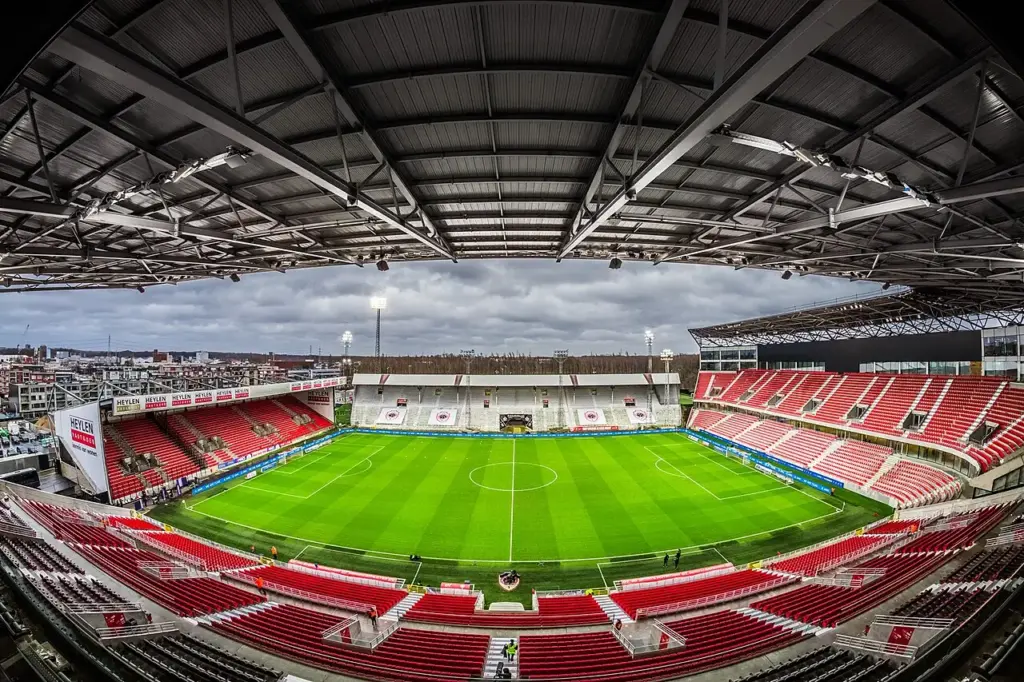
Anderlecht’s disciplinary case arrives days after a major court ruling on home-grown player quotas in Belgian football. Royal Antwerp and its former player Lior Refaelov had brought a legal challenge against the UEFA and Belgian home-grown player rules under European Union law.
In a 2023 judgment on the dispute, the European Court of Justice ruled that home-grown player quotas can restrict EU free-movement and competition law, and it instructed national courts to decide whether those rules are justified. On 4 November 2026, a Brussels court rejected the challenge from Royal Antwerp and Refaelov, finding that the Belgian rules serve valid goals, including youth development, and are proportionate, as outlined in Reuters coverage of the Brussels court decision.
That court battle and Anderlecht’s match-sheet error are separate legal questions. The Brussels court ruling confirms that Belgium’s home-grown rules remain valid and in force, but it has no bearing on whether Anderlecht broke Article B6.108 against Club Brugge or what penalty should follow.
For Anderlecht, the case now rests entirely with the RBFA’s Disciplinary Council for Professional Football. Until the council hears the case and publishes a formal decision, the 1-1 draw from 8 November stands, Anderlecht has not been given a forfeit loss, and Club Brugge has not been awarded the three points.