
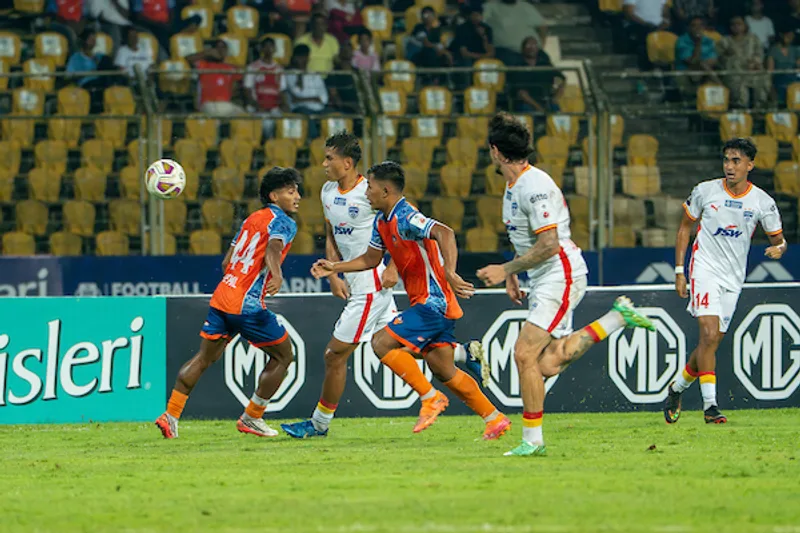
When Bengaluru FC scored a stoppage-time goal against FC Goa on 6 November, the immediate argument on the pitch centred on a throw-in. FC Goa believed the ball belonged to them, yet Bengaluru took the restart and scored from the resulting attack. Over the following days, that disputed call grew from a touchline disagreement into a wider test of how Indian football handles officiating accountability.
According to The Times of India’s report on FC Goa’s complaint, club chief executive Ravi Puskur wrote to All India Football Federation (AIFF) deputy secretary general M. Satyanarayan to ask for a formal review of the match officials’ performance. Puskur also asked the federation to share its written findings with the club. In response, the AIFF reportedly planned to convene a review meeting bringing together the Indian Super League (ISL), its clubs, and the refereeing department.
Neither FC Goa’s letter nor any technical evaluation of the match has been released publicly. As of 11 November, the AIFF has not published any finding that the officials broke a rule, nor has it announced formal disciplinary proceedings. That silence points to a larger structural issue in Indian football governance: when a club raises a serious officiating concern, the rules offer no clear guarantee that it will ever see how the complaint was judged.
Why a performance complaint differs from a match protest
Understanding what FC Goa can realistically expect requires separating a technical performance complaint from a formal protest against a match result. The AIFF’s June 2026 Disciplinary Code sets out strict rules for both paths, and they lead to very different outcomes.
Under Article 114.2 of the Code, any person or body can submit a written complaint reporting conduct they believe violates AIFF regulations. Article 114.1.6 allows the federation to open disciplinary proceedings based on such a filing. However, filing a letter does not automatically trigger a formal case. Under Article 115, the AIFF Secretariat must first run a preliminary investigation.
If the Secretariat finds insufficient initial evidence, known in legal terms as no prima facie case, it can close the file there. Only when that threshold is met must the Secretariat open formal proceedings, notify the party involved, and allow them to respond.
Challenging the match result itself carries an even higher bar. Article 70.1 establishes that a referee’s on-field decisions are final and normally outside the reach of judicial review. While Article 70.5 allows a club to protest a match result if a referee’s decision amounted to an obvious violation of a rule, the protesting club bears the burden of proof.
A disputed throw-in rarely clears that hurdle because deciding which player last touched the ball is a factual judgment by the officials, not a misapplication of the Laws of the Game. FC Goa can ask the federation to grade the officials’ performance without asking to overturn the scoreline, and the two procedures remain separate.
The AIFF Disciplinary Committee’s corrective powers are similarly narrow. Article 74 lets the committee punish serious offences that officials missed during play and fix specific disciplinary mistakes, such as mistaken identity on a card, but it grants no broad authority to cancel goals following a disputed throw-in or corner.
Nor does the Code entitle an aggrieved club to demand a referee’s suspension, a public apology, or a revised match report. Under Article 97, facts recorded in match officials’ reports are presumed accurate unless a party provides evidence proving otherwise. When official reports contradict each other and cannot be reconciled, the referee’s word governs events on the pitch, while the Match Commissioner’s report governs incidents off it.
| Disciplinary Code provision | Primary focus | Effect on club complaints |
| Article 70.1 | Finality of decisions | On-field referee calls are generally final and exempt from judicial review. |
| Article 70.5 | Match protests | Results can be challenged only if the club proves an obvious rule violation. |
| Article 74 | Committee powers | Covers missed serious offences and specific disciplinary errors, not routine restarts. |
| Article 97 | Official reports | Referee reports are presumed accurate for on-field facts unless disproved. |
| Articles 114.1.6 and 114.2 | Written complaints | Any party may file a written report of alleged regulatory breaches. |
| Article 115 | Preliminary inquiry | Secretariat screens complaints for initial evidence before opening a formal case. |
Also Read: Why was the Indian Women’s League delayed? What is known so far
Commercial ownership without sporting disclosure
FC Goa’s push for written answers arrives during the first season of the ISL’s restructured ownership model. In an 8 July 2026 announcement, the AIFF confirmed that ISL clubs would take over the league’s commercial rights while the federation kept administrative control and operational oversight.
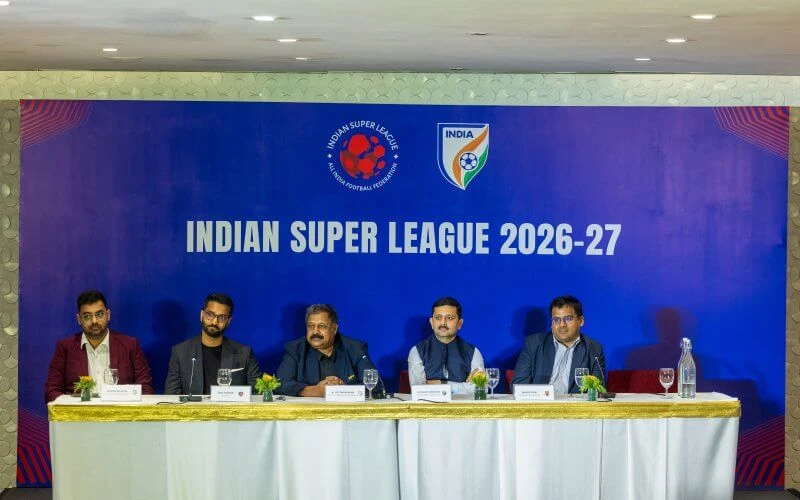
This division of power sits at the centre of the current dispute. Clubs now carry greater financial responsibility for growing and marketing the competition, yet the AIFF still runs match administration. Owning commercial rights does not give clubs the power to appoint match officials, evaluate their performances, or hand down disciplinary penalties.
Because the July announcement did not include the full operating contract or a detailed schedule of duties, the public record does not show what information clubs are contractually entitled to request from the refereeing department. It is equally unclear from that statement whether clubs hold any formal say in how referee appointments and assessments are managed.
What the public record does confirm is that the AIFF already runs an internal grading system for its match officials. In June and July, the federation held an evaluation programme covering Key Match Incident (KMI) recognition, match assessment, grading, and referee debriefs.
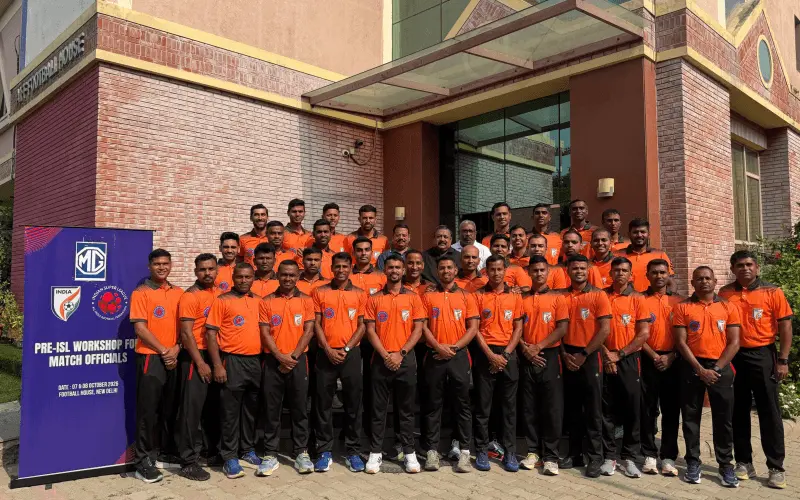
In October, the AIFF gathered 19 referees, 21 assistant referees, and 12 referee assessors for a two-day ISL workshop aimed at standardising assessment and feedback guidelines.
The machinery to review officiating mistakes clearly exists inside the federation. The problem for clubs is what happens after an assessment is completed. Published AIFF regulations set no deadline for replying to a club’s technical complaint. They also give clubs no automatic right to see the assessor’s grade, the KMI panel’s verdict, or any internal training steps taken with the officials.
FC Goa’s request for written findings targets that exact blind spot. The federation can keep individual staff evaluations confidential while still telling a club whether a decisive incident was reviewed and whether the call on the pitch was correct.
Why video technology would not fix the throw-in dispute
High-profile officiating disputes in the ISL inevitably prompt calls for Video Assistant Referee (VAR) technology, yet VAR would not have rescued FC Goa on 6 November.
Under current International Football Association Board (IFAB) rules, VAR intervention is restricted to four match-changing situations: goals, penalty decisions, direct red cards, and mistaken identity. Competitions may also choose to allow video checks for clearly wrong corner-kick awards, provided the check happens immediately without delaying play.
Crucially, IFAB protocol states that restart decisions, including throw-ins, cannot be overturned once play has resumed. Even in a stadium equipped with full VAR, the video booth could not have called play back after Bengaluru took the throw-in. While Indian football still has strong reasons to invest in video support for penalties, red cards, and offsides, cameras cannot substitute for a reliable post-match review system.
Also Read: Why the AIFF’s new IFL fee model risks pricing out rising clubs
Building referee accountability without compromising independence
Protecting referees from club pressure is a basic principle of football governance. Match officials need complete independence on the pitch, and clubs should never dictate who officiates their games or how referees are punished. However, protecting referees from interference does not mean serious technical complaints should vanish into a closed room without a reply.
The AIFF could close this accountability gap by publishing a clear protocol for club complaints. That framework could specify how clubs submit video and written evidence, which department evaluates the clip, how many days the federation has to reply, and what summary findings will be shared. It could also draw a clear line between an isolated human error, a pattern of poor officiating that requires coaching, and conduct serious enough to trigger a disciplinary inquiry under Article 115.
Public transparency would further strengthen trust across the league. By releasing anonymised summaries of KMI reviews and common officiating trends, the AIFF could show how it grades contentious calls. Japan uses selected video clips to explain refereeing standards to the public, proving that a federation can educate clubs and supporters without leaking confidential personnel files.
FC Goa’s letter will not change the points table from the Bengaluru match, and AIFF rules were never designed to replay games over a disputed throw-in. The real test is whether the federation can match the ISL’s new commercial structure with modern administrative transparency. When clubs invest heavily in the league’s commercial future while the federation controls the whistle, giving clubs a clear, reasoned answer when things go wrong is a basic requirement for a credible competition.