

Girondins de Bordeaux will find out on Friday, 13 November, if the Commercial Court of Bordeaux approves requested changes to the club’s continuation plan. A continuation plan is a court-supervised agreement that sets out how a business in financial trouble will pay back its debts over time to stay afloat.
The ruling is central to Bordeaux’s financial restructuring. It will decide how the club pays off its remaining debts and could clear the final reported condition required for prospective buyer Park Bench Bordeaux to legally complete its proposed takeover.
The court heard the club’s request to amend the plan on 3 November. Under the revised proposal, Bordeaux’s remaining verified debt would drop from €18.6 million to €14.5 million. The club would pay off that reduced balance over 12 years.
The proposed schedule keeps early payments small while the team competes in Régional 1, a regional amateur division in the French football pyramid. Creditors, who are the organisations and people owed money by the club, would receive 1% of their verified claims in 2027 and 1% in 2028.
Those annual repayments would rise to 2% in 2029 and 2% in 2030. This structure is meant to leave Bordeaux with enough cash to pay for everyday running costs during the early stages of its recovery. The schedule remains a proposal until the judge issues a ruling.
How creditors voted on the revised proposal
Before the court hearing, the club put the revised plan to a vote among 14 classes of creditors. Each class groups together creditors with similar types of financial claims.
Nine of the 14 classes voted in favour of the changes. According to a report by Le Mag Bordeaux, those nine supporting classes hold 70% of the total value of the claims against the club.
Five creditor classes voted against the proposal. The opposing groups included sporting creditors, suppliers, the City of Bordeaux and Bordeaux Métropole. The two local government authorities have been asked to accept an extra 90% cut to the money they are owed. Available media reports do not include a full class-by-class breakdown of the ballot, so the identity of the fifth opposing class and the exact position of every group have not been made public.
Winning the backing of nine creditor classes helps the club’s case, but it does not guarantee approval. The Commercial Court judge still has to review the amended plan and decide whether it meets the legal standards governing the club’s financial restructuring.
Park Bench’s €25 million commitment and the ownership process
During the 3 November court hearing, Park Bench Bordeaux reaffirmed a commitment to put €25 million into the project. That €25 million figure is a pledge of future support, not money that has already arrived in the club’s bank accounts.
So far, €1.2 million has actually been provided to Bordeaux as a loan, according to WebGirondins, citing information from Sud Ouest. Park Bench proposes converting that €1.2 million loan, along with future cash injections, into equity, which means turning the debt into ownership shares.
Converting loans into shares would strengthen the club’s balance sheet because Bordeaux would not have to pay the money back as debt. Even with that proposed conversion, most of the €25 million commitment has not yet been paid.
The takeover itself is built around the transfer of La Dynamie, the holding company that owns almost all of Girondins de Bordeaux. In October, the club’s legal advisers, August Debouzy, described the transfer of La Dynamie’s shares to Park Bench as part of the wider transaction. More recent media reports state that the court’s approval of the revised continuation plan is still needed before the sale of the club can be legally completed.
Also Read: Gateshead saved as Flacks Group clears debts and resolves dispute
Trademark security and employment claims
Even if the court backs the revised debt schedule, other financial and legal issues remain on the table. Speaking to television channel TV7 after the 3 November hearing, club president Dominique Delport said Bordeaux had faced more than €20 million in debt and roughly €20 million in potential employment tribunal liabilities.
WebGirondins reported Delport’s remarks, including his confirmation that the club’s trademark had been pledged as security to investment firm Fortress. Available reports do not confirm whether Fortress has reached a final settlement or released its legal hold over the club’s trademark. That leaves the status of the trademark as an open question in the rescue process.
The €20 million figure for employment tribunal cases refers to historical potential claims from former staff, rather than confirmed debts that the club must definitely pay today. That exposure may have changed as individual disputes have been settled or otherwise resolved.
Next steps for the club and its stadium
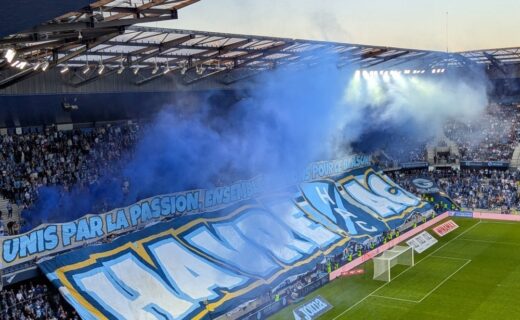
Alongside the court process, Bordeaux have reportedly reached a separate agreement in principle to play at the Stade Atlantique with a reduced seating capacity. Even if the Commercial Court approves the revised debt plan on 13 November, the club will still need to turn Park Bench’s pledged funding into actual cash payments and work through its remaining financial obligations. Bordeaux Métropole is scheduled to review and vote on the proposed stadium arrangement on 4 December.