
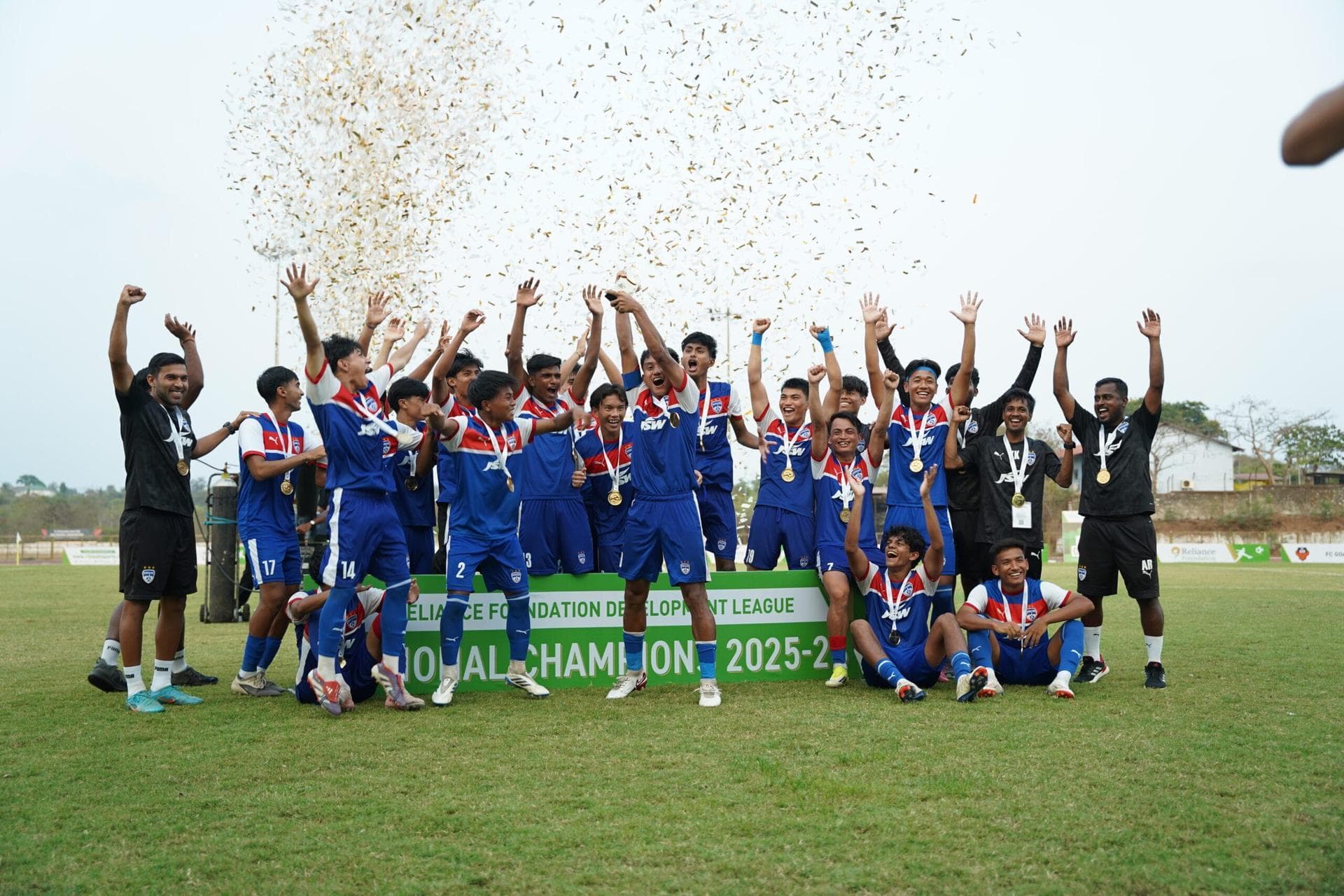
On 18 April 2026, Bengaluru FC defeated FC Goa 1-0 in the Reliance Foundation Development League final to claim their third championship in the competition. That match closed the latest completed edition of a national under-21 tournament built to help young Indian footballers move from academy football toward the senior professional game.
Stepping up from youth football into a senior first team remains one of the hardest transitions for young players in India. The Reliance Foundation Development League, commonly called RFDL, gives under-21 players competitive match minutes, national scouting exposure, and links to professional club squads and national age-group teams.
What RFDL is and who takes part
Organised under Reliance Foundation Youth Sports (RFYS), RFDL is a nationwide under-21 development tournament. While the Indian Super League (ISL) and the I-League operate as senior professional competitions, RFDL provides a youth platform where emerging footballers can gain competitive match experience before entering senior football.
The tournament brings together reserve and youth sides from ISL and I-League clubs alongside independent clubs and youth academies. Recent editions of the competition have involved more than 50 teams across India. According to RFYS’s official announcement for the 2025-26 season, the latest edition with published participation figures featured 54 teams and around 1,800 players, reported as more than 1,800 participants, representing 17 states and Union Territories.
Alongside player development, the tournament gives coaches practical experience in a competitive environment. RFYS also states that the league aims to strengthen player welfare and safeguarding practices across participating clubs and academies.
How the tournament format works
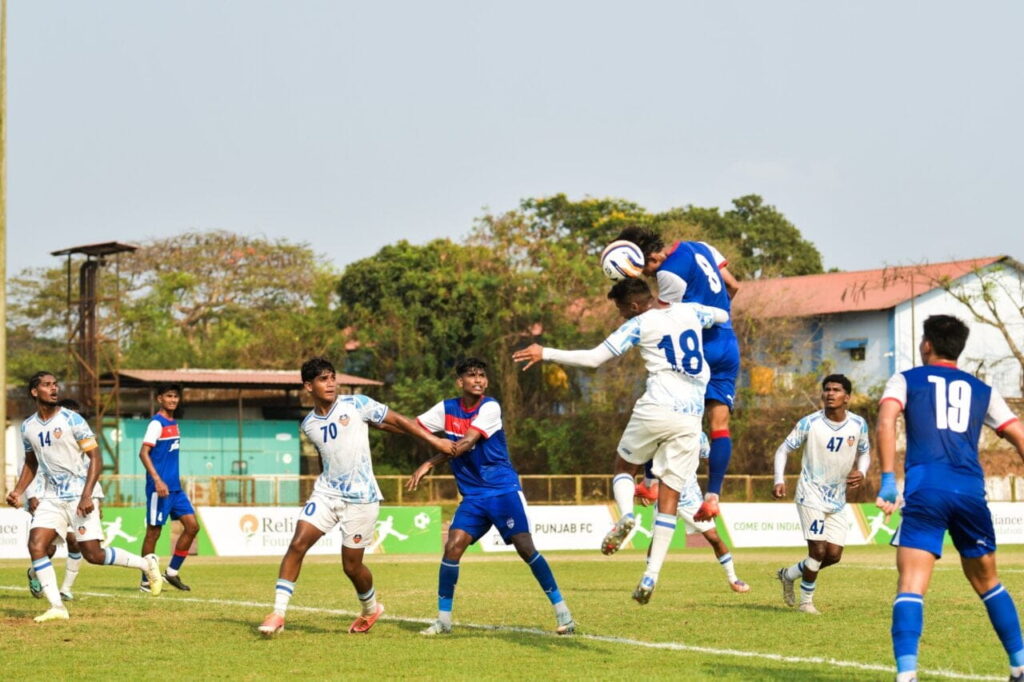
Training sessions alone cannot prepare young players for the physical demands, speed, and decision-making pressure of senior football. RFDL uses a multi-stage structure that starts at regional level and narrows down to a national title round.
In the 2025-26 season, teams began in regional qualifiers played across nine regions. Twenty-four teams advanced from those qualifiers into the zonal group stage, and 12 sides progressed from there into the national group stage.
The top four teams from the national group stage then competed in the national championship phase to decide the trophy. This progression allows players from different parts of India to reach a national stage, and it lets club scouts judge young talent against unfamiliar opponents rather than relying only on local league matches.
Also Read: Why was the Indian Women’s League delayed? What is known so far
Past champions and the rise of independent academies
Recent editions of RFDL have highlighted both the consistency of major professional club sides and the potential of independent academies. Bengaluru FC’s 1-0 win over FC Goa on 18 April 2026 secured the club’s third RFDL trophy.
The previous 2024-25 edition showed that an independent academy could also reach the final stage of the national competition. Manipur’s Classic Football Academy qualified for the four-team national championship phase as the only independent academy side and advanced to the final.
In that 2024-25 title match, Mohun Bagan Super Giant beat Classic Football Academy 3-0, with Pasang Dorjee Tamang scoring all three goals. While Mohun Bagan lifted the trophy, Classic FA’s run demonstrated that players developed outside the largest professional clubs could compete at the top end of the tournament.
Regional participation expanded further in the 2025-26 campaign. Teams from Jammu and Kashmir entered RFDL for the first time alongside clubs from Assam and Arunachal Pradesh, while teams from Manipur returned to competitive action in the league.
Links to the ISL and India’s national age-group teams
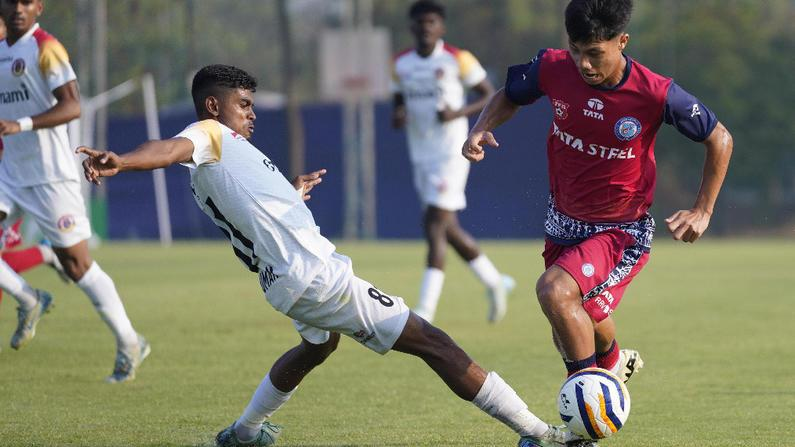
One measure of a youth competition’s value is how closely it connects to national age-group selections and senior club squads. In its fifth-season announcement, RFYS reported that 21 of the 23 players selected for India’s September 2025 AFC U-23 Asian Cup qualifying squad had played competitive minutes in earlier RFDL seasons.
That figure shows that RFDL has formed part of the match background for most of that India under-23 group. Even so, a single league does not develop players by itself, because club training, academy coaching, other tournaments, and individual work all contribute to a player’s rise.
In 2024, RFYS also reported that around 45 players had progressed through the RFDL pathway into the Indian Super League. The organiser named Sivasakthi Narayanan, Naorem Roshan Singh, Vibin Mohanan, and Mohammed Aimen among the players who featured in RFDL before playing in the ISL.
Also Read: Mon reach fourth straight Dr. T. Ao Semis as Zunheboto stun Kohima
Those examples illustrate how the tournament can help young footballers gain visibility with senior clubs. Still, earning youth exposure or signing a senior contract is different from making regular first-team appearances over several seasons. Because the reported progression figures come from the organiser without a detailed public list tracking each graduate’s senior minutes, the league’s exact long-term career impact remains harder to verify independently.
International Matches Through the RFDL Pathway
RFDL has also served as a qualification route for Indian youth teams to play international opponents. As confirmed in the Premier League’s 2024 Next Generation Cup announcement, East Bengal FC, Muthoot FA, and Punjab FC earned places through RFDL to represent India at the tournament, where they faced academy sides from England and South Africa.
In July 2026, Bengaluru FC, FC Goa, and Punjab FC travelled to Japan for an RFDL-linked international exposure tour against Japanese club teams. Bengaluru FC finished the trip with three wins from three games, and FC Goa beat Giravanz Kitakyushu 3-1 in their final match.
The Japan trip also overlapped with national age-group preparations. According to an All India Football Federation report on the India U-20 men’s camp, 15 players were temporarily released from national camp at their clubs’ request to play on the Japan tour before rejoining the India U-20 squad. That group consisted of eight players from Punjab FC, six from Bengaluru FC, and one from FC Goa.
Matches against overseas clubs expose young Indian players to unfamiliar playing styles and higher match tempos, which can support their preparation for international age-group qualifiers. At the same time, international tours reach only a small group of top-finishing teams and do not guarantee senior international success.
The Limits of a Single Tournament in Player Development
Although RFDL provides structured national competition for under-21 players, it cannot solve every structural challenge in Indian football. Bringing teams from more states into the tournament widens access to competitive matches, yet independent academies and smaller clubs often do not have the same facilities, medical support, physical conditioning staff, or long-term coaching resources as major professional clubs.
Young players also require consistent match minutes throughout the season rather than relying on one tournament campaign. Once footballers move past the under-21 age limit, their development depends on whether senior clubs offer realistic pathways from reserve and academy squads into first-team football.
Also Read: NorthEast United’s fast start: Can they challenge for the ISL title?
More detailed public data would help measure how often that step succeeds. An annual public report tracking how many RFDL participants sign professional contracts, make senior debuts, log regular first-team minutes, and earn national-team selections would tell a clearer story than participation totals alone.
RFDL already connects independent academies, professional club reserves, national age-group squads, and international youth fixtures within a single under-21 pathway. Its lasting importance to Indian football will depend on how many young players convert those developmental matches into long-term careers in senior football.