
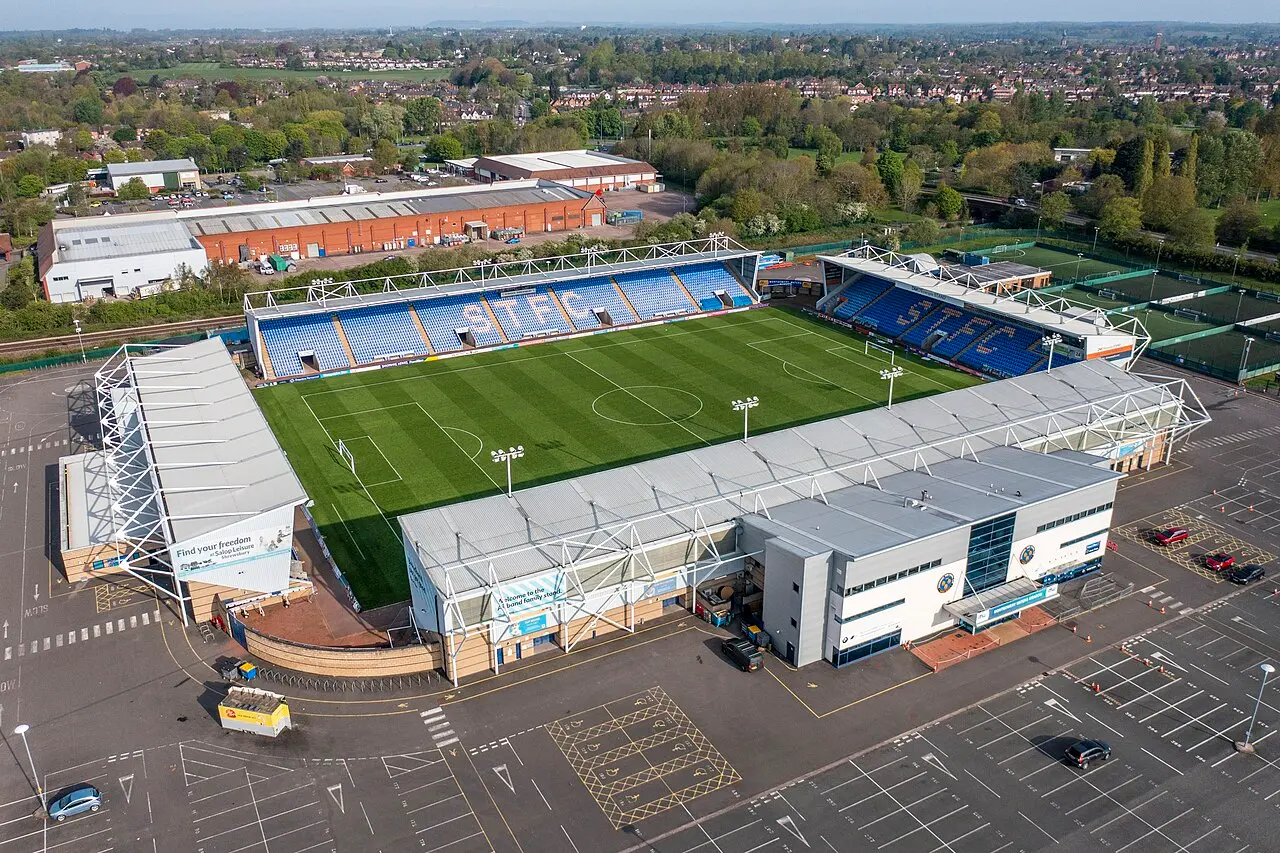
Miami-based investment group Biscayne ST LLC has completed an 87.4% takeover of League Two club Shrewsbury Town, ending Roland Wycherley’s 30-year ownership. Controlled by American real estate investor Scott Davidson, the consortium finalised the deal on 9 November 2026 after months of negotiations and regulatory checks.
Davidson becomes chairman of the club, while former Premier League and United States goalkeeper Brad Friedel joins as a minority investor and full-time Sporting Director. Chief Executive Officer Liam Dooley remains in his post and stays on the board as an active director. Scottish League Two club The Spartans FC directors Craig Graham and Will Dotson have also been named to the Shrewsbury board.
Wycherley, who joined the Shrewsbury board in 1993 and took control in 1996, stepped down at age 85 as the English Football League’s longest-serving owner. In his farewell message, Wycherley said the club needed fresh investment to build on its foundation and academy, adding that it was time to embrace a new era. Davidson called his group “stewards or guardians” of the club in his opening remarks to supporters.
A five-year Championship plan and global scouting push
In media briefings between 11 and 13 November, Friedel and Davidson outlined a five-year goal to reach the EFL Championship, a division Shrewsbury last played in during 1989. Friedel tempered that target in a BBC interview by calling the second tier “another formidable task” and noting that the new leadership wants to “baby-step” its progress.
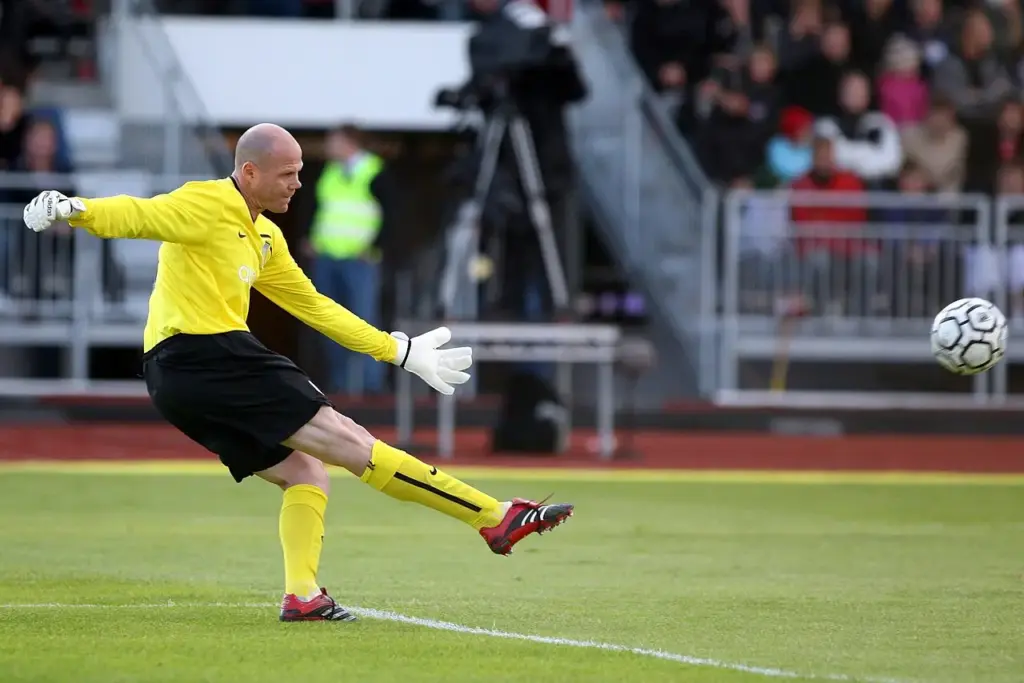
Before choosing Shrewsbury, Friedel and Davidson spent months reviewing clubs in Turkey, Poland, Portugal, and the Netherlands. Friedel, who spent five months as a board advisor at Turkish club Beşiktaş in 2024, said no country offers a better football environment or commercial market than the United Kingdom. “Shrewsbury hit all the boxes of what we like, but also what we feel we can deliver towards the club and the town,” he told BBC Sport.
Davidson told the Express & Star that despite approaches from other clubs, the choice became “Shrewsbury Town or nothing“. The consortium wanted a “one-town club” with unified local support, an established community foundation, and stadium land owned outright by the club.
Friedel’s sporting plan rests on four priorities:
- Daily coaching alignment: Friedel is relocating to England to attend every training session alongside Head Coach Gavin Cowan, who signed a contract extension in May 2026 running through the 2027-28 season. Friedel said he rejects top-down “dictators” and favours clear, shared roles.
- Data-led global recruitment: A new analytics platform and expanded scouting unit will work alongside Head of Recruitment Tom Ware, First-Team Scout Chuks Aneke, and Head of Performance Analysis Stephen Corns. Friedel said he uses data heavily without signing players on numbers alone, and plans to scout regions Shrewsbury have not targeted before. However, he has not yet explained how a fourth-tier club will clear UK work-permit rules for overseas signings.
- Academy growth: The new owners want to expand the youth pathway under Academy Manager Charlie Musselwhite to produce more first-team players.
- Stadium upgrades: Phased improvements to Croud Meadow are planned to begin in summer 2027, with Davidson saying changes will be made “in a very thoughtful way“.
Also Read: Shrewsbury Town win Kian McMahon-Brown red card appeal
Cross-border ties with the Spartans FC
The takeover creates a formal ownership link between Shrewsbury Town and Edinburgh club The Spartans FC. Davidson became majority shareholder of Spartans in July 2021 alongside Spartans chairman Craig Graham and New York financier Will Dotson. Under their leadership, Spartans won promotion from the Lowland League to Scottish League Two in 2023 and expanded The Spartans Community Foundation to 36 weekly programmes serving more than 2,000 people.
Even so, Spartans remain a part-time fourth-tier club with no audited financial accounts in the public record, and they parted ways with long-serving manager Douglas Samuel in September 2026 following a misconduct investigation. Because Davidson, Graham, and Dotson hold roles at Spartans, the Shrewsbury buyout required Scottish FA approval under Article 13, which governs dual interests in clubs.
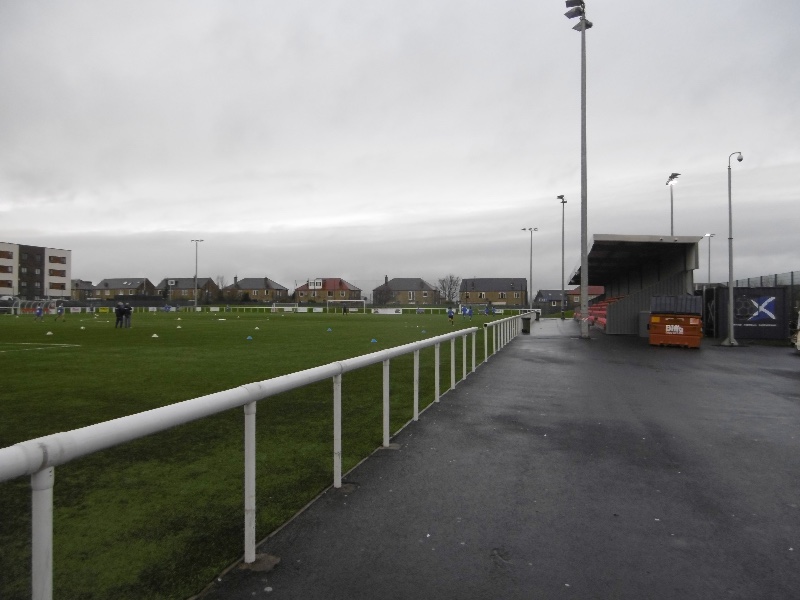
The Scottish FA Board approved the dual roles on 6 October 2026, following initial clearance from the EFL and the Independent Football Regulator (IFR) on 7 September and individual approval for Friedel on 25 September.
No joint holding company covering both clubs has been announced. Neither the regulators nor the two clubs have published written conflict-of-interest rules covering cross-border player loans, shared scouting data, or commercial deals.
Balance sheet strain meets EFL spending rules
Reaching the Championship within five years will require major financial backing. Statutory accounts for the year ending 30 June 2025, covering Shrewsbury’s final season in League One, show turnover of £7,214,063 and a post-tax loss of £599,412, narrowed from a £1.56 million post-tax loss the previous year. Total staff wages consumed 74% of turnover, or roughly £5.34 million, and relegation to League Two subsequently reduced central league distributions.
At the end of June 2025, the club held just £70,254 in cash at the bank. Current liabilities of £3,609,107 outweighed current assets of £675,289, leaving a £2.93 million net current liability deficit. Against that working-capital pressure sits one major advantage. The club company holds debt-free freehold ownership of 9,875-capacity Croud Meadow and its surrounding Oteley Road land, with all six historic charges satisfied and zero registered debt.
Any immediate squad investment must fit within League Two’s Salary Cost Management Protocol (SCMP). Under EFL rules, player and manager wages, bonuses, and agents’ fees are capped at 50% of Relevant Turnover, which covers matchday ticket sales, broadcast money, commercial deals, and net profits from non-matchday stadium events.
Unlike League One clubs, which adopted a flat 50% cap on owner cash injections for 2026-27, League Two allows clubs to count non-repayable owner equity on a four-tier sliding scale. Clubs can add 100% of the first £500,000, 75% of the next £250,000, 60% of the next £250,000, and 50% of any amount above £1 million. Shareholder loans do not count. Because Shrewsbury’s 2026-27 League Two turnover is unpublished, exact budgets remain private, but under the EFL’s published worked example, a £2 million non-repayable equity injection would add £1,337,500 in wage room.
What Companies House shows and what remains undisclosed
Public filings at Companies House logged between 9 and 11 November 2026 confirm the core transfer of control. Biscayne ST LLC is registered as the controlling corporate shareholder, Davidson and Graham are recorded as appointed directors, and Wycherley and company secretary Michael Parry have formally stepped down. Dooley and previous holding entity Blue and White UK Holdings also filed notices ending their controlling shareholder status.
Several financial and governance details remain unconfirmed in public records through 11 November:
- Sale price: Neither side has disclosed what Biscayne ST LLC paid for its 87.4% stake.
- Insider loans: The June 2025 accounts list £1,325,000 in interest-free related-party loans, comprising £825,000 owed to Wycherley and £500,000 owed to director Duncan Montgomery. Public filings do not state whether those loans were repaid, waived, or assumed by the new owners.
- Remaining shares: Public records have not yet confirmed who holds the remaining 12.6% of shares.
- Board filings: Companies House logs through 11 November showed no resignation notice for Montgomery, who remains listed on the board in local media reports, and no formal director appointment filings yet for Friedel or Dotson.
- Co-investor clearance: Prospective co-investor Bryan Finnerty of Atlantic Football Ventures and his four business partners, Joe Grossman, Eric Sullivan, Jason Clement, and Mark Grossman, were named in takeover announcements, but their formal entry remains subject to passing EFL and IFR Owners’ and Directors’ Tests.
Also Read: Could an EFL League One luxury tax curb rising third-tier wages?
Relief on the terraces and a winning start
The takeover closes a turbulent period on and off the pitch. Relegated from League One in May 2025 after a 10-season stay, Shrewsbury struggled in League Two until sacking Michael Appleton in January 2026. Former club defender Gavin Cowan arrived from Brackley Town the following day and steered the team to 19th place and survival.
Supporter frustration over takeover delays flared in autumn 2026. Ten fan groups published an open letter in September demanding clarity, and an October plea for a completion timetable prompted the outgoing board to accuse supporters of applying public pressure and issuing threats, one day before Wycherley confirmed talks were in their final stages. That tension gave way to relief after completion, with around 250 fans giving Davidson and Friedel a standing ovation at a Croud Meadow forum on 12 November.
Two days later, the new ownership watched their first matchday in charge end in a 2-1 League Two home victory over Oldham Athletic. Second-half goals from Kevin Berkoe in the 73rd minute and Josh Davison four minutes later secured the points before Favour Fawunmi scored a stoppage-time consolation for Oldham. The win lifted Shrewsbury to 21 points from 15 league games and 10th place in the live standings ahead of the January 2027 transfer window.